

Sleep apnea affects millions of adults and often goes undiagnosed for years. The American Academy of Sleep Medicine estimates that nearly 30 million adults in the United States experience obstructive sleep apnea, yet most cases remain untreated. One of the simplest non medical interventions involves elevating the upper body during sleep. Elevation helps keep airways more open and reduces the collapse that triggers breathing interruptions.
A wedge pillow for sleep apnea creates that elevation naturally. Instead of stacking pillows that shift during the night, a structured wedge supports the head, neck, and chest in a stable position. People also use these pillows for acid reflux, snoring, post surgery recovery, and back support while sitting in bed.
The challenge is choosing the best wedge pillows for sleep apnea that actually feels comfortable through the night. Height, firmness, materials, and shape all influence how well it works in daily use.
A Quick Overview of The Best Wedge Pillow for Sleep Apnea
These wedge pillows for sleep apnea stand out for support, comfort, and long term practicality.
- Kölbs Bed Wedge Pillow with Jacquard Cover
- Bedluxe Wedge Pillow Headboard 3 Piece Orthopedic Set
- Bedluxe 10 Inch Bed Wedge Pillow
- Kölbs Bed Wedge Pillow for Sleep Apnea Standard Width
- Bedluxe 10 Inch Triangle Wedge Pillow
- ROYALAY Positioning Wedge Pillow for Side Sleeping
- Bedluxe Adjustable Headboard Wedge Pillow Set
- Nordjager Memory Foam Wedge Pillow
Best Wedge Pillow for Sleep Apnea of 2026
Wedge pillows vary widely in height, shape, and firmness. Some focus on sleep positioning while others serve as multi use support cushions for reading, recovery, or sitting in bed. The best wedge pillows for sleep apnea below approach the problem from slightly different angles, which makes them useful for different types of sleepers.
Kölbs Bed Wedge Pillow for Sleep Apnea
Classic elevated support with stylish cover
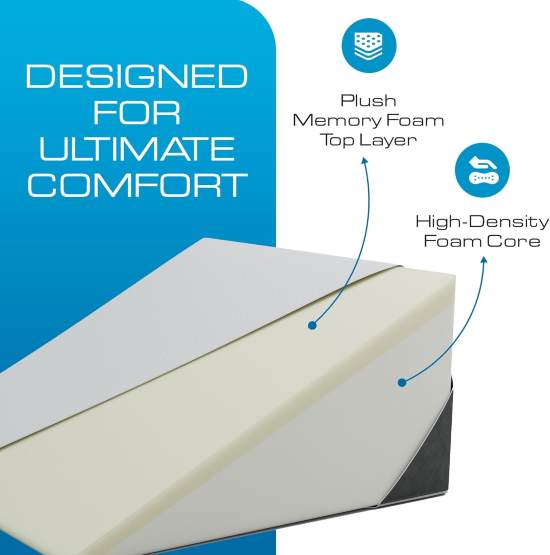
The Kölbs wedge has a simple triangular design that focuses on consistent elevation rather than adjustability. At about 7.5 inches tall, it provides a moderate incline that works well for people who need airway support but dislike steep angles.
In real use, the pillow feels firm but not rigid. The foam compresses slightly under the shoulders which prevents the neck from bending forward too sharply. Many sleepers find that this height reduces snoring while still allowing comfortable side movement.
The jacquard cover adds a small but noticeable improvement. It feels more like bedding fabric than medical equipment, which makes it blend naturally into a bedroom.
This pillow suits people who want straightforward elevation without complicated adjustments. However, sleepers who prefer steep elevation or multi position support may find the angle too gentle.
Maintenance is simple since the removable cover washes easily and the foam holds shape well over time.
User Review
Michael R.
“I started using this after my doctor suggested elevating my head for mild sleep apnea and reflux. The height feels natural and does not push my chin toward my chest like stacked pillows did. I also appreciate that the cover looks like normal bedding.”
Key Features
• Quality: Dense foam keeps the incline stable throughout the night.
• Comfort: Gentle elevation supports breathing without forcing the neck forward.
• Cover Fabric: Jacquard cover feels soft and looks like regular bedding.
• Size: Moderate height suits most back sleepers.
• Maintenance: Removable washable cover simplifies cleaning.
• Support Stability: Wedge shape prevents pillow shifting overnight.
• Noise Level: Foam stays quiet when adjusting position.
Pros and Cons
| Pros | Cons |
| Comfortable moderate incline | Height may feel low |
| Attractive removable cover | Not adjustable angle |
| Stable foam structure | Large footprint on bed |
Bedluxe Wedge Pillow Headboard 3PCS Orthopedic Set
Modular support for sleep and sitting
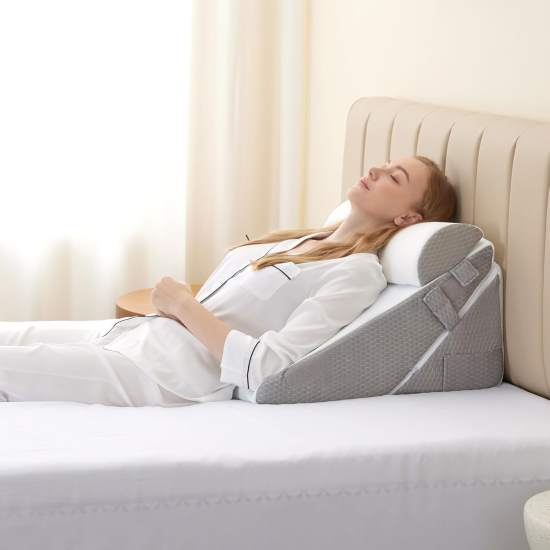
This Bedluxe set approaches wedge support differently. Instead of one triangular pillow, it includes three pieces that can stack or separate to create different positions.
The main wedge supports the upper body while the additional pieces act as leg elevation cushions or back support when sitting up in bed. For sleep apnea users, combining the pieces creates a steeper incline that keeps the chest elevated.
The foam feels moderately firm and breathable. During sleep, the pillow keeps the shoulders elevated without compressing too much under weight.
This setup works well for people who spend time reading or working in bed because the pieces convert easily into a backrest. Post surgery users also appreciate the flexibility.
The tradeoff is space. Three pillows occupy more room on the mattress, which may feel bulky in smaller beds.
User Review
Angela M.
“I bought this after sinus surgery but kept using it for sleep apnea. The adjustable pieces helped me find an angle that actually felt comfortable. I now use it both for sleeping and sitting up with my laptop.”
Key Features
• Adjustability: Three piece design allows multiple elevation angles.
• Versatility: Works for sleeping, reading, or recovery positioning.
• Foam Support: Balanced firmness supports upper body weight.
• Breathability: Fabric allows airflow during longer use.
• Position Control: Separate pieces prevent sliding during sleep.
• Posture Support: Helps maintain upright sitting position.
• Cleaning Ease: Removable covers simplify upkeep.
Pros and Cons
| Pros | Cons |
| Adjustable elevation positions | Requires more bed space |
| Useful for recovery support | Setup takes adjustment |
| Works for sitting upright | Bulkier than single wedge |
Bedluxe Wedge Pillow 10 Inch Bed Wedge
Steeper incline for stronger elevation
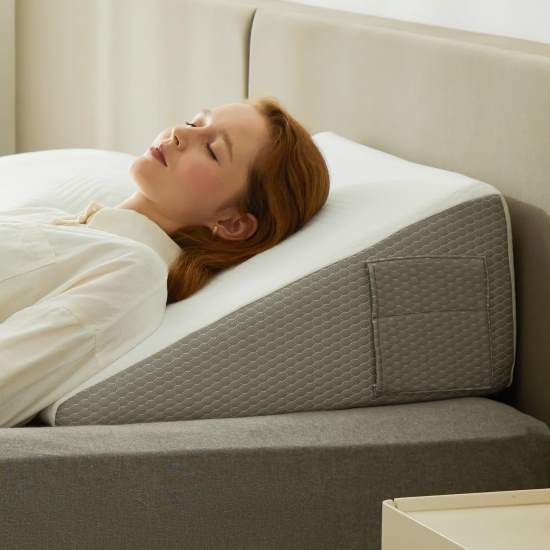
The 10 inch Bedluxe wedge offers a noticeably higher incline than moderate wedges. That steeper angle helps people who need stronger airway elevation or more aggressive reflux relief.
In practice, the pillow creates a clear slope from shoulders to head. Back sleepers usually adapt quickly since the foam distributes weight across the entire upper torso rather than concentrating pressure under the neck.
The material feels supportive without becoming stiff. Over several hours of sleep, the structure keeps its shape well.
This height suits people who already know they benefit from stronger elevation. New users sometimes find the angle slightly steep at first.
Routine care remains straightforward since the cover removes easily and the foam resists flattening.
User Review
David P.
“My snoring improved almost immediately with the higher incline. It took a few nights to adjust to the height but now it feels normal and my breathing feels clearer.”
Key Features
• Elevation Height: Ten inch incline improves airway openness.
• Foam Density: Balanced firmness distributes body weight evenly.
• Structure: Triangle shape keeps body stable during sleep.
• Breathable Cover: Fabric prevents heat buildup overnight.
• Durability: Foam retains shape after repeated use.
• Versatility: Works for reflux, snoring, and recovery positioning.
Pros and Cons
| Pros | Cons |
| Strong elevation support | May feel steep initially |
| Stable triangular design | Less flexible positioning |
| Durable foam structure | Large size on mattress |
Kölbs Bed Wedge Pillow Standard Width
Compact wedge for moderate elevation
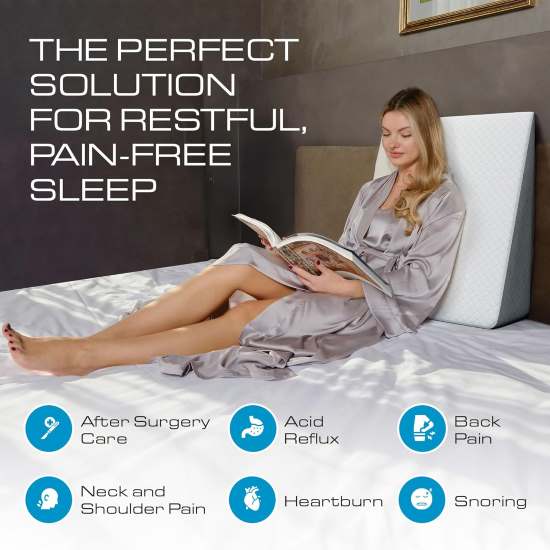
This version of the Kölbs wedge uses the same design philosophy but emphasizes a standard width that fits easily on most beds.
The height remains around 7.5 inches which makes it suitable for people who want airway support without feeling like they are sleeping upright.
During use, the foam maintains gentle firmness that keeps the shoulders lifted while allowing slight movement. That balance prevents pressure buildup around the neck.
The pillow works especially well for combination sleepers who shift between back and side positions during the night.
Maintenance remains simple with a removable cover and durable foam core.
User Review
Laura S.
“I move around a lot when I sleep and this wedge stays comfortable in different positions. It keeps my head elevated but still feels like a normal pillow setup.”
Key Features
• Balanced Height: Supports breathing while remaining comfortable.
• Compact Width: Fits well on most bed sizes.
• Soft Fabric Cover: Comfortable surface against skin.
• Stable Foam: Maintains consistent elevation through the night.
• Lightweight Build: Easy to reposition when needed.
• Maintenance: Machine washable cover simplifies care.
Pros and Cons
| Pros | Cons |
| Comfortable moderate height | Not ideal for steep elevation |
| Lightweight and easy repositioning | Limited adjustability |
| Washable fabric cover | Single position design |
Bedluxe Triangle Wedge Pillow 10 Inch
Simple design focused on elevation
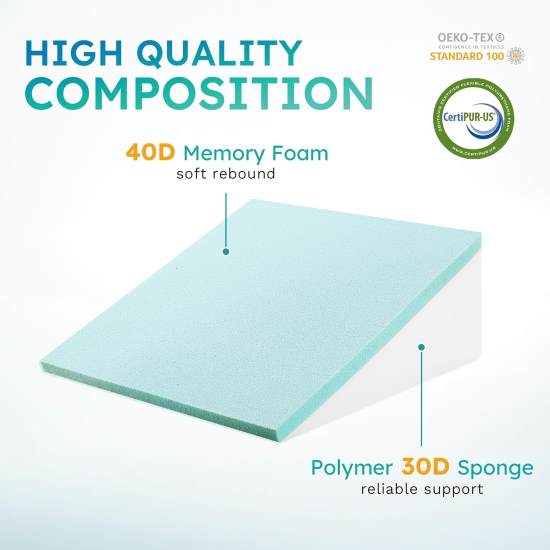
This Bedluxe model keeps things straightforward. The triangle shape provides a consistent ten inch incline that supports breathing and posture.
Users often describe the foam as supportive without feeling rigid. The incline raises the upper body enough to reduce airway pressure and reflux symptoms.
It works best for back sleepers who want consistent elevation throughout the night. Side sleepers can still use it but may need a secondary pillow for neck alignment.
The breathable cover helps prevent overheating during longer sleep sessions.
User Review
Chris L.
“I wanted something simple that would keep my head elevated all night. This wedge stays firm and does not slide around like stacked pillows.”
Key Features
• Height Support: Strong incline promotes open breathing position.
• Foam Structure: Maintains shape during overnight use.
• Breathable Fabric: Reduces heat buildup.
• Stability: Wedge shape prevents movement on mattress.
• Versatile Use: Helpful for reflux and snoring relief.
• Easy Care: Removable washable cover.
Pros and Cons
| Pros | Cons |
| Strong elevation support | Limited position flexibility |
| Stable wedge structure | Bulky for small beds |
| Breathable fabric cover | Firm feel for some users |
ROYALAY Positioning Wedge Pillow for Side Sleeping
Designed for side sleep positioning
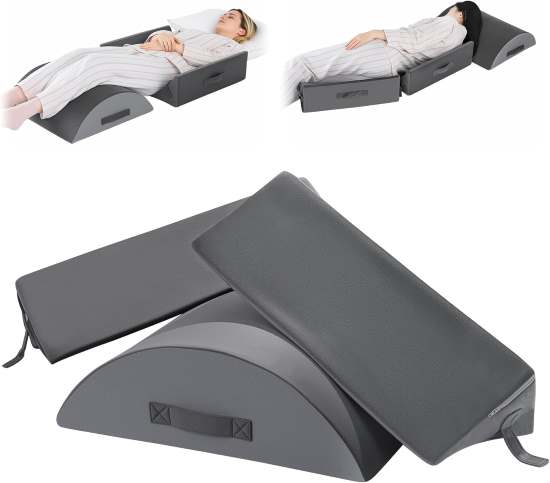
The ROYALAY wedge focuses on body positioning rather than simple elevation. Its shape helps keep sleepers comfortably on their side, which many doctors recommend for sleep apnea management.
Instead of supporting the upper torso, this wedge fits alongside the body to prevent rolling onto the back. The foam remains soft enough to feel comfortable but firm enough to maintain position.
Caregivers often use this pillow for elderly users or people recovering from surgery since it stabilizes sleep posture.
This design suits side sleepers particularly well. Back sleepers may not benefit as much since the pillow functions mainly as a positioning barrier.
User Review
Karen T.
“My partner kept rolling onto his back which made his apnea worse. This wedge helps him stay on his side through the night without feeling restrictive.”
Key Features
• Position Control: Helps maintain side sleeping posture.
• Comfort Foam: Soft yet supportive body contact.
• Caregiver Friendly: Useful for positioning assistance.
• Sleep Stability: Prevents rolling during the night.
• Versatile Placement: Works along back or legs.
• Lightweight Build: Easy to reposition.
Pros and Cons
| Pros | Cons |
| Encourages side sleeping posture | Not a head elevation pillow |
| Comfortable body support | Limited apnea elevation |
| Helpful for caregivers | Requires adjustment period |
Bedluxe Adjustable Headboard Wedge Pillow Set
Flexible incline support system
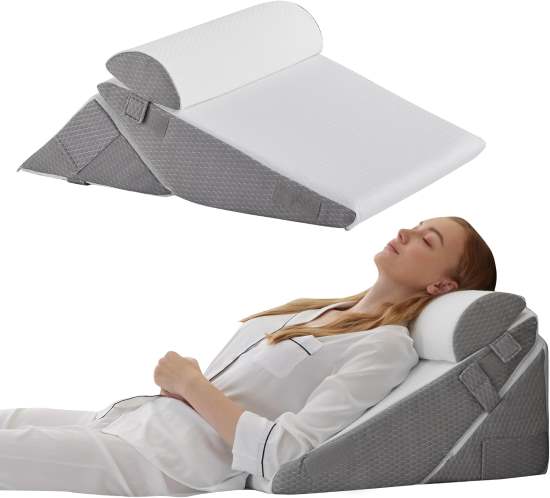
This Bedluxe configuration again uses a multi piece design but focuses on building customizable elevation angles against the headboard.
Users can stack the wedges to create stronger incline positions for sleep apnea or separate them for leg elevation.
The foam provides medium firmness which helps maintain structure without feeling overly stiff. For many sleepers, this flexibility makes it easier to find a comfortable angle.
However, the modular setup requires a little experimentation before finding the right configuration.
User Review
Nathan G.
“I experimented with different setups until I found an angle that helped my breathing. Once I adjusted it correctly the comfort improved a lot.”
Key Features
• Adjustable Setup: Multiple wedge combinations create custom angles.
• Multi Purpose Design: Works for sleep or sitting support.
• Supportive Foam: Maintains shape under body weight.
• Breathable Fabric: Comfortable during longer use.
• Position Flexibility: Pieces can be rearranged easily.
• Maintenance: Covers remove for washing.
Pros and Cons
| Pros | Cons |
| Highly adjustable design | Setup takes experimentation |
| Good for sitting support | Uses more mattress space |
| Versatile recovery use | Multiple pieces to manage |
Nordjager Memory Foam Wedge Pillow
Balanced support with memory foam feel
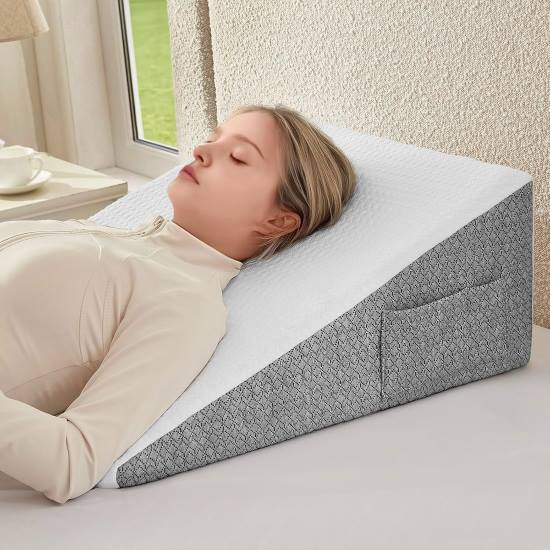
The Nordjager wedge combines traditional incline support with memory foam cushioning. The dimensions provide a moderate ten inch elevation that works for both sleep and resting.
Memory foam creates a slightly softer surface compared with standard wedges. It conforms around the shoulders and neck which helps reduce pressure points.
Many users appreciate this balance because the pillow feels supportive yet comfortable for longer sleep sessions.
The patterned polyester cover adds durability and breathability.
This wedge works well for sleepers who prefer a slightly softer surface while still maintaining stable elevation.
User Review
Daniel K.
“The memory foam makes a noticeable difference. It feels supportive but not stiff, and I wake up with less neck tension.”
Key Features
• Memory Foam Layer: Conforms gently to shoulders and neck.
• Elevation Height: Moderate incline improves breathing position.
• Breathable Cover: Polyester fabric promotes airflow.
• Pressure Relief: Foam distributes body weight evenly.
• Durability: Dense foam maintains structure over time.
• Multi Use Comfort: Suitable for sleep or resting.
Pros and Cons
| Pros | Cons |
| Comfortable memory foam feel | Slightly heavier design |
| Good pressure distribution | Slower rebound foam |
| Balanced elevation support | Takes space on bed |
Discover Also:
From Newborn Nights to Pregnancy Relief: Which Nursing Pillow Actually Makes Breastfeeding Easier?
Best Nursing Pillow of 2026 Roundup: Affordable Options
Buying Guide
Choosing the right wedge pillow involves more than simply picking a height. Comfort, stability, and long term usability depend on several interacting factors.
Elevation Angle and Airway Support
The incline of a wedge pillow directly affects how well it keeps the airway open during sleep. A higher incline usually reduces airway collapse more effectively, especially for back sleepers.
Many buyers assume the steepest pillow works best. In reality, extreme elevation can push the chin downward and create neck tension. Moderate inclines between about seven and ten inches often balance airway support with comfort.
Long term satisfaction usually comes from choosing a height that keeps the chest elevated while maintaining natural neck alignment.
Foam Density and Structural Quality
The internal foam determines whether the pillow maintains its shape over months of use. Low density foam compresses quickly and loses its supportive angle.
Many shoppers focus only on softness, assuming a softer pillow equals greater comfort. Over time, overly soft foam allows the upper body to sink, which reduces the intended elevation.
Higher density foam maintains consistent support. Even if it feels slightly firmer at first, it usually performs better across years of nightly use.
Surface Comfort and Fabric Quality
The cover fabric plays a larger role than many people expect. Rough synthetic fabrics can trap heat or irritate the skin during long sleep sessions.
Buyers often overlook this detail because they focus on the foam structure. However, breathable fabrics such as cotton blends or textured polyester can significantly improve comfort.
A removable washable cover also simplifies routine care and keeps the pillow hygienic.
Size and Bed Compatibility
Wedge pillows occupy more space than standard pillows. Large wedges may extend far down the mattress which can crowd smaller beds.
Some buyers purchase oversized wedges without measuring available space. Later they discover the pillow pushes other bedding out of place.
Selecting a size that fits comfortably within the bed layout improves nightly usability and prevents constant repositioning.
Maintenance and Long Term Care
Foam wedges rarely require complex maintenance, but covers must be cleaned regularly.
People sometimes assume wedge pillows require the same maintenance as normal pillows. Because wedges stay in constant contact with the upper body, covers collect oils and sweat more quickly.
Removable washable covers reduce long term upkeep and extend the life of the foam core.
Safety and Sleep Posture
Correct posture matters as much as elevation. If the neck bends sharply forward, breathing can actually become more restricted.
Some users stack additional pillows on top of wedges. While this may feel comfortable initially, it often disrupts the intended angle.
A wedge that supports both shoulders and head generally maintains healthier sleep posture.
Common Buyer Mistakes
Choosing Height Without Testing Comfort
Many buyers select the tallest wedge available assuming it will provide maximum relief. In practice, steep angles can feel uncomfortable for long sleep sessions and may strain the neck.
Testing moderate heights first often leads to better long term comfort.
Ignoring Shoulder Support
People often focus only on head elevation. If the shoulders remain flat while the head rises, the neck bends unnaturally.
A wedge that supports the entire upper torso distributes weight more evenly.
Expecting Immediate Adaptation
Sleeping on an incline feels different from traditional flat sleeping. Some buyers abandon wedge pillows after one or two nights.
Most users need several nights for their body to adapt to the new position.
Overlooking Bed Size
Large wedges can overwhelm smaller mattresses. Buyers sometimes realize too late that the pillow occupies half the bed.
Checking dimensions beforehand prevents this issue.
Assuming All Foam Feels the Same
Foam density varies widely. Some wedges feel firm and supportive while others compress easily.
Evaluating foam structure rather than marketing descriptions usually provides a better indicator of long term performance.
Using Additional Pillows Improperly
Stacking pillows on top of wedges may seem helpful but often disrupts alignment.
Instead, selecting the correct wedge height usually eliminates the need for extra pillows.
How to Match Products to Specific Needs
Occasional Users
People who only need elevation during certain periods such as reflux flare ups often prefer moderate wedges. These models provide comfortable incline without dramatically altering sleep posture.
Daily Sleep Apnea Management
Frequent users benefit from stable foam wedges with consistent structure. Durable materials prevent flattening and maintain proper airway support night after night.
Side Sleepers
Side sleepers sometimes struggle with traditional wedges. Positioning wedges designed to keep the body on its side often work better than simple elevation pillows.
Small Bedroom Spaces
Compact wedges or moderate height pillows fit better in smaller beds. Oversized wedges can dominate limited mattress space.
Multi Purpose Bed Use
Readers, laptop users, or people recovering from surgery often prefer modular wedge sets. Adjustable designs allow multiple sitting and reclining positions throughout the day.
Conclusion
Wedge pillows provide a practical way to support better breathing during sleep. By elevating the upper body, they help reduce airway obstruction, minimize snoring, and relieve pressure caused by reflux or congestion.
The best choice depends less on brand and more on personal comfort factors such as height, foam firmness, and sleeping position. Some sleepers prefer a simple triangular wedge while others benefit from adjustable multi piece systems.
Understanding how these features affect real sleep habits makes the selection process far easier. With the right wedge pillow, many people find noticeable improvements in comfort and nighttime breathing.
FAQs
Can a wedge pillow help with sleep apnea?
Yes, elevating the upper body can reduce airway collapse and improve breathing during sleep.
What wedge height works best for sleep apnea?
Most adults find seven to ten inches provides effective elevation without causing neck strain.
Can side sleepers use wedge pillows?
Yes, but positioning wedges or supportive neck pillows may improve comfort.
How long does it take to adjust to a wedge pillow?
Most users adapt within several nights as the body becomes used to sleeping at an incline.
Do wedge pillows help with acid reflux too?
Yes, elevation prevents stomach acid from traveling upward during sleep.