

Pillows are ubiquitous in homes, serving both aesthetic and functional purposes. While decorative pillows add flair to interior spaces, support pillows prioritize comfort and health. This article delves into the distinctions between these two types of pillows, exploring their history, current applications, benefits, challenges, and future trends. By comparing their design, functionality, and impact, we aim to provide valuable insights for homeowners, designers, and health-conscious individuals.
History of Pillows
Origins of Decorative Pillows
Decorative pillows have a rich history tied to cultural and aesthetic traditions.
-
Ancient Beginnings: Pillows date back to ancient Mesopotamia (circa 7000 BCE), where stone headrests were used for status and comfort. By ancient Egypt, ornate pillows symbolized wealth, often adorned with intricate designs.
-
Middle Ages and Renaissance: In Europe, pillows became decorative elements in royal courts, featuring embroidery and luxurious fabrics like silk and velvet.
-
Modern Era: The 20th century saw decorative pillows become mainstream in home decor, with mass production enabling diverse styles, from minimalist to bohemian.
Evolution of Support Pillows
Support pillows emerged from a need to address physical health and comfort.
-
Early Medical Uses: In ancient China and Egypt, pillows made of wood or ceramic were used to align the spine or elevate the head for breathing.
-
20th Century Advancements: The development of foam and ergonomic designs in the mid-20th century led to pillows tailored for spinal support and pain relief.
-
Modern Innovations: Today, support pillows incorporate memory foam, gel, and adjustable fillings to cater to specific medical conditions like sleep apnea or lumbar pain.
Key Concepts and Definitions
What Are Decorative Pillows?
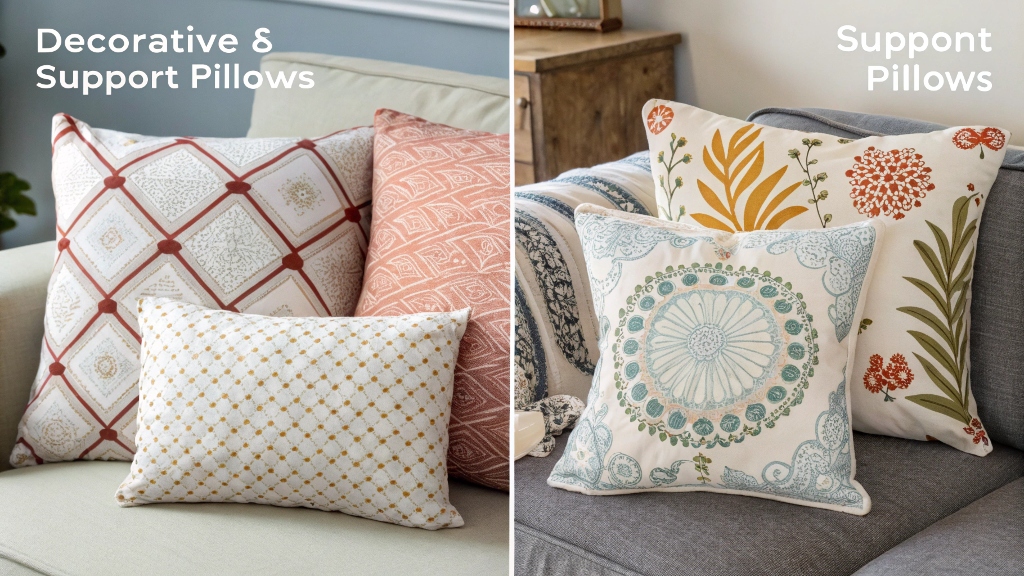
Decorative pillows, also known as throw or accent pillows, are designed to enhance a room’s aesthetic.
-
Purpose: Primarily aesthetic, they add color, texture, and personality to spaces like living rooms or bedrooms.
-
Materials: Often made with cotton, silk, velvet, or synthetic blends, with fillings like polyester or down.
-
Design Variability: Available in countless shapes (square, round, bolster), sizes, and patterns, from geometric to floral.
What Are Support Pillows?
Support pillows are engineered for physical comfort and health benefits.
-
Purpose: Designed to promote proper posture, alleviate pain, or support specific body parts during sleep or rest.
-
Types: Include cervical pillows, lumbar pillows, wedge pillows, and body pillows, each targeting different needs.
-
Materials: Typically use memory foam, latex, or gel, with hypoallergenic and breathable covers.
Key Differences
|
Feature |
Decorative Pillows |
Support Pillows |
|---|---|---|
|
Primary Function |
Aesthetic enhancement |
Health and comfort |
|
Materials |
Cotton, silk, polyester, down |
Memory foam, latex, gel |
|
Target Use |
Home decor (sofas, beds, chairs) |
Sleep, pain relief, posture support |
|
Durability |
Varies, often less durable |
High, designed for long-term use |
|
Cost Range |
$10–$100+ | $30–$200+ |
|
Customization |
High (patterns, shapes, colors) |
Moderate (ergonomic designs) |
Benefits of Decorative Pillows
Decorative pillows offer both aesthetic and functional advantages.
Aesthetic Enhancement
-
Visual Appeal: They introduce color pops or patterns, tying together a room’s design scheme.
-
Example: A vibrant red throw pillow can unify a neutral sofa with matching curtains.
-
-
Versatility: Easily swapped to refresh a room’s look seasonally or for events.
-
Texture and Layering: Combine materials like velvet and linen for a luxurious, multi-dimensional effect.
Emotional Impact
-
Mood Setting: Soft, plush pillows create a cozy, inviting atmosphere.
-
Personal Expression: Custom designs or monogrammed pillows reflect individual style.
Practical Uses
-
Light Support: While not their primary function, they can offer minor comfort for lounging.
-
Affordability: Budget-friendly options allow frequent updates without significant investment.
Benefits of Support Pillows
Support pillows prioritize health and comfort, with benefits grounded in ergonomics.
Health and Wellness
-
Pain Relief: Cervical pillows align the spine, reducing neck and shoulder pain.
-
Example: A 2023 study in the Journal of Orthopedic Research found that 78% of participants with chronic neck pain reported relief using contoured pillows.
-
-
Improved Sleep Quality: Wedge pillows elevate the upper body, aiding those with acid reflux or sleep apnea.
-
Posture Correction: Lumbar pillows support the lower back during prolonged sitting.
Specialized Applications
-
Pregnancy Support: Body pillows reduce strain on hips and backs for pregnant women.
-
Post-Surgery Recovery: Wedge pillows facilitate comfortable positioning after procedures like hip surgery.
-
Accessibility: Adjustable pillows cater to diverse body types and medical needs.
Long-Term Durability
-
High-Quality Materials: Memory foam and latex retain shape and support for years.
-
Hypoallergenic Options: Ideal for allergy sufferers, with antimicrobial covers.
Challenges of Decorative Pillows
Despite their appeal, decorative pillows have limitations.
Maintenance
-
Cleaning Difficulty: Delicate fabrics like silk require professional cleaning, increasing costs.
-
Wear and Tear: Frequent use can lead to flattened fillings or faded colors.
-
Storage Issues: Seasonal swaps require storage space, a challenge in smaller homes.
Limited Functionality
-
Minimal Support: Not designed for ergonomic benefits, they may exacerbate discomfort if used for sleep.
-
Overuse in Design: Too many pillows can clutter spaces, making them impractical for daily use.
Cost Considerations
-
High-End Pricing: Designer pillows can cost upwards of $100, limiting accessibility.
-
Frequent Replacement: Cheaper options may need replacing annually due to quality degradation.
Challenges of Support Pillows
Support pillows also face hurdles, particularly in balancing function and aesthetics.
Aesthetic Limitations
-
Design Constraints: Ergonomic shapes often prioritize function over style, clashing with decor.
-
Color and Texture: Limited to neutral tones and utilitarian fabrics like cotton or mesh.
Cost and Accessibility
-
Higher Price Point: Quality support pillows, like memory foam models, can exceed $150.
-
Specialized Fit: Finding the right pillow requires trial and error, which can be costly and time-consuming.
Practical Drawbacks
-
Bulkiness: Large pillows, like body or wedge types, may not suit smaller beds or spaces.
-
Heat Retention: Memory foam can trap heat, causing discomfort for hot sleepers.
-
Adjustment Period: Users may need weeks to adapt to new pillow shapes or firmness.
Current State of the Pillow Market
Decorative Pillow Trends
The decorative pillow market thrives on versatility and consumer demand for personalization.
-
Sustainability: Eco-friendly materials like organic cotton and recycled polyester are gaining traction.
-
Bold Patterns: Geometric, abstract, and botanical designs dominate 2025 interior trends.
-
Customization: Online platforms like Etsy offer bespoke pillows with monograms or custom prints.
-
Market Size: The global decorative pillow market was valued at $7.2 billion in 2024, with a projected 5% annual growth rate through 2030.
Support Pillow Innovations
Support pillows are evolving with technology and consumer health awareness.
-
Smart Pillows: Some models include sensors to track sleep patterns, adjusting firmness via apps.
-
Cooling Technology: Gel-infused foams and breathable covers address heat retention.
-
Medical Integration: Collaborations with orthopedic specialists ensure pillows meet clinical standards.
-
Market Growth: The therapeutic pillow market is expected to reach $4.8 billion by 2028, driven by aging populations and health consciousness.
Future Trends
Decorative Pillows
-
Smart Fabrics: Textiles with temperature-regulating or stain-resistant properties are emerging.
-
Augmented Reality (AR): Apps allow consumers to visualize pillows in their spaces before purchasing.
-
Cultural Fusion: Designs blending global influences, like African mud cloth or Japanese shibori, are trending.
Support Pillows
-
AI-Driven Customization: AI algorithms may analyze sleep data to recommend or adjust pillow settings.
-
Sustainable Materials: Bamboo-derived foams and biodegradable fillings are gaining popularity.
-
Wearable Integration: Pillows syncing with wearable devices to optimize sleep environments.
Product Reviews
Decorative Pillow: West Elm Velvet Throw Pillow
-
Overview: A 20×20-inch pillow with a plush velvet cover and polyester filling.
-
Pros:
-
Luxurious texture and vibrant color options.
-
Durable stitching for frequent use.
-
Affordable at $39–$59, depending on size.
-
-
Cons:
-
Dry-clean only, increasing maintenance costs.
-
Polyester filling may flatten over time.
-
-
Verdict: Ideal for adding elegance to a living room, but not suited for heavy functional use.
Support Pillow: Tempur-Pedic TEMPUR-Neck Pillow
-
Overview: A contoured memory foam pillow designed for neck and shoulder support.
-
Pros:
-
Ergonomic shape promotes spinal alignment.
-
Durable, retains shape after years of use.
-
Hypoallergenic cover suitable for sensitive users.
-
-
Cons:
-
High cost ($119–$159).
-
Firm feel may require an adjustment period.
-
-
Verdict: A top choice for those with chronic neck pain, though the price may deter budget-conscious buyers.
Read More Also: DIY Pillow Storage Solutions for RVs: Pros, Cons, and FAQs
FAQs
1. Can decorative pillows be used for support?
Decorative pillows are not designed for ergonomic support and may cause discomfort if used for sleep or prolonged sitting.
2. Are support pillows worth the higher cost?
Yes, for those with medical needs like back pain or sleep apnea, their durability and health benefits justify the investment.
3. How often should I replace decorative pillows?
Replace every 1–2 years if used frequently, or when they lose shape or show wear.
4. Do support pillows work for all sleep positions?
No, pillows are designed for specific positions (e.g., side, back). Choose based on your primary sleep style.
5. Can I combine decorative and support pillows?
Yes, use decorative pillows for aesthetics on top of support pillows for comfort, balancing style and function.
Conclusion
Decorative and support pillows serve distinct yet complementary roles. Decorative pillows elevate a home’s aesthetic, offering versatility and emotional appeal, while support pillows prioritize health, comfort, and durability. Both face challenges, from maintenance to cost, but innovations like smart fabrics and AI-driven designs promise exciting futures. By understanding their differences, consumers can make informed choices to enhance both their living spaces and well-being.