
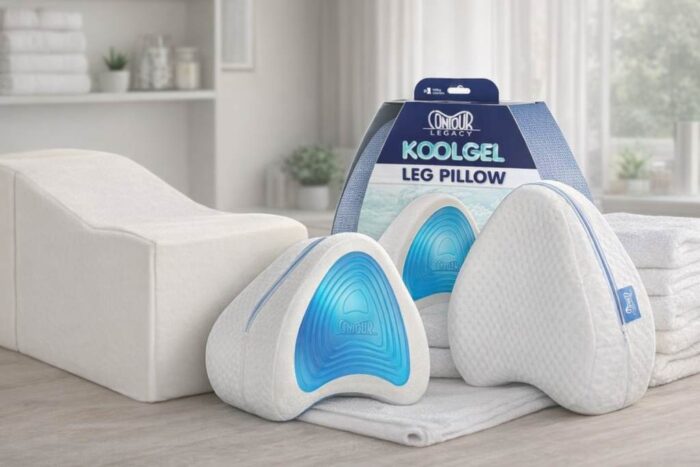
Quality sleep depends heavily on body alignment, yet many side sleepers unknowingly twist their hips and spine every night. Research from the National Sleep Foundation shows that nearly 60 percent of adults report chronic sleep discomfort linked to poor sleep posture. Orthopedic specialists often recommend leg support pillows to maintain spinal neutrality during sleep.
That advice explains the rising popularity of Contour’s orthopedic pillow line. These products focus on simple biomechanics rather than complex sleep technology. A small pillow placed correctly between the legs can reduce pressure on joints, ease muscle tension, and support healthier sleep posture.
This guide explores the full contour knee pillows lineup that supports legs, knees, and lower back during rest and recovery. Each product addresses a slightly different type of support, and understanding those differences helps you choose the right contour knee pillow for your nightly routine.
A Quick Overview of The Best Contour Knee Pillow
The best contour knee pillows produce several orthopedic sleep supports designed to stabilize the legs and spine during rest.
- Contour Legacy Leg & Knee Foam Support Pillow for Side Sleepers
- Contour Legacy Cool Leg & Knee Foam Support Pillow for Side Sleepers
- Contour Legacy Leg & Knee Foam Support Pillow for Side Sleepers (duplicate listing)
- Contour Legacy Cool Leg & Knee Foam Support Pillow for Side Sleepers (duplicate listing)
- Contour Replacement Pillowcase Cover for The Legacy Pillow
- Contour BackMax Bed Wedge Lumbar Support System
Best Contour Knee Pillow of 2026
Contour focuses on orthopedic alignment rather than luxury bedding aesthetics. The brand designs its contour knee pillow around natural sleeping posture and joint positioning.
Contour Legacy Leg & Knee Foam Support Pillow for Side Sleepers
Classic ergonomic knee spacer
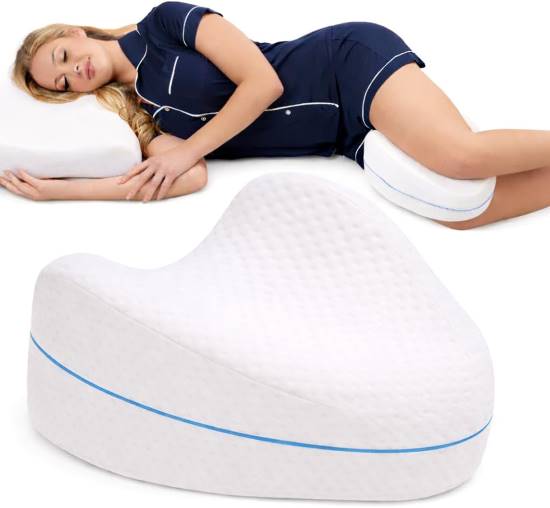
This pillow uses contoured memory foam shaped to sit naturally between the legs while side sleeping. The curved design keeps knees separated while allowing the legs to rest comfortably without needing straps.
In everyday use the foam compresses slightly under weight but rebounds quickly when pressure shifts. That balance prevents the pillow from flattening overnight. Most users notice the biggest difference in hip rotation. Instead of the top leg collapsing forward, the pillow maintains neutral alignment.
The size remains compact enough for tossing and turning without constantly repositioning it. Many people use it for lower back strain, sciatica discomfort, or pregnancy related hip pressure.
Cleaning stays simple because the removable fabric cover washes easily. The foam core should remain dry and well ventilated.
It works best for consistent side sleepers. Back sleepers may find the shape unnecessary.
User Review
Melissa R.
I started using this pillow after long hours at a desk started affecting my lower back. The first night felt unusual because my legs stayed separated instead of stacking. After a few nights my hips felt noticeably less tight in the morning. I appreciate that it stays in place without straps or complicated adjustments.
Key Features
• Quality: High density memory foam keeps knees separated without feeling rigid
• Durability: Foam rebounds well after compression during long nights
• Size: Compact profile fits naturally between thighs
• Breathability: Fabric cover allows moderate airflow around legs
• Maintenance: Removable cover simplifies regular washing
• Comfort: Curved design reduces hip rotation during sleep
• Mobility: Lightweight enough for easy repositioning
• Limitations: Less useful for back sleepers
Pros and Cons
| Pros | Cons |
| Comfortable ergonomic leg separation | Only useful for side sleepers |
| Memory foam holds shape well | Foam cannot be machine washed |
| Lightweight and easy positioning | Some users prefer larger pillows |
Contour Legacy Cool Leg & Knee Foam Support Pillow for Side Sleepers
Ventilated memory foam support
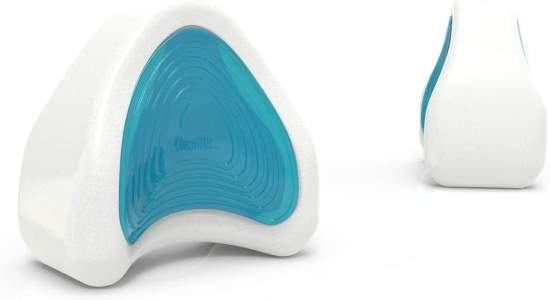
This version builds on the original Legacy pillow but adds airflow channels inside the foam. The ventilation reduces heat buildup that sometimes occurs with dense memory foam.
In real use the cooling effect feels subtle rather than dramatic. The biggest difference appears during warm nights when regular foam tends to trap heat around the legs. The ventilated design keeps the pillow feeling less stuffy.
The contour shape remains identical to the standard Legacy pillow. It keeps the knees spaced comfortably while preventing the upper leg from rotating inward.
Maintenance stays similar to the original model. The removable cover washes easily and protects the foam interior from sweat or dust.
People who sleep warm or live in humid climates usually benefit the most from this version.
User Review
Daniel S.
I liked the regular Legacy pillow but switched to the cooling version during summer. The airflow channels actually help more than I expected. My legs no longer feel trapped against warm foam at night. The support level stayed the same which I appreciate.
Key Features
• Cooling: Ventilated foam reduces heat buildup
• Comfort: Maintains natural hip alignment for side sleepers
• Durability: Structured foam resists long term flattening
• Size: Same compact shape as the original model
• Maintenance: Washable cover protects foam core
• Airflow: Internal channels allow better breathability
• Weight: Light enough for easy movement in bed
• Limitations: Cooling effect remains mild
Pros and Cons
| Pros | Cons |
| Ventilated foam improves airflow | Cooling effect remains subtle |
| Maintains stable knee separation | Slightly firmer feel initially |
| Lightweight ergonomic shape | Limited benefit for back sleepers |
Contour Legacy Leg & Knee Foam Support Pillow for Side Sleepers
Reliable orthopedic positioning
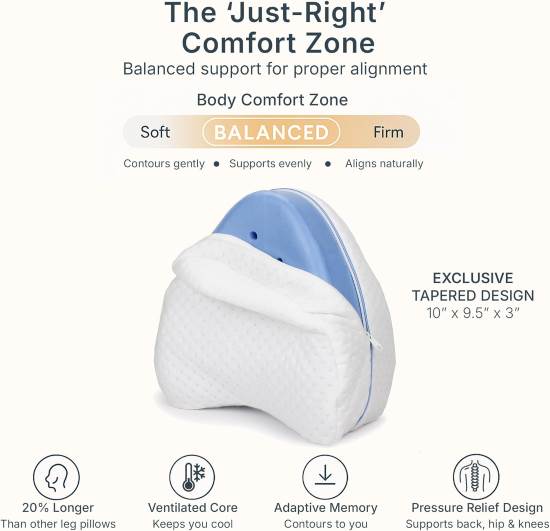
This listing mirrors the original Legacy pillow and delivers the same contour based support. The design focuses on spinal neutrality by preventing the upper leg from collapsing forward.
In real sleep situations the pillow creates a comfortable gap between the thighs. That spacing reduces torque in the lower back and hips. Many users report less stiffness after long nights of side sleeping.
The foam density feels medium firm which helps maintain structure even when shifting positions. Because it lacks straps or attachments, it remains easy to adjust naturally while turning during sleep.
The pillow suits people seeking straightforward joint support without bulky orthopedic equipment.
User Review
Kevin L.
I bought this mainly for knee discomfort after running. The pillow keeps my legs aligned and stops my knees from pressing together. It feels small but does exactly what it needs to do.
Key Features
• Alignment: Maintains neutral leg positioning
• Foam Density: Medium firm structure prevents collapse
• Shape: Curved design fits comfortably between thighs
• Ease of Use: No straps or complicated adjustments
• Maintenance: Washable cover for easy care
• Portability: Small enough for travel use
• Comfort: Reduces knee to knee pressure
• Limitations: Minimal support for back sleeping
Pros and Cons
| Pros | Cons |
| Simple ergonomic design | Limited multi position use |
| Good foam recovery rate | Cooling features absent |
| Easy to reposition nightly | May feel small initially |
Contour Legacy Cool Leg & Knee Foam Support Pillow for Side Sleepers
Breathable orthopedic support
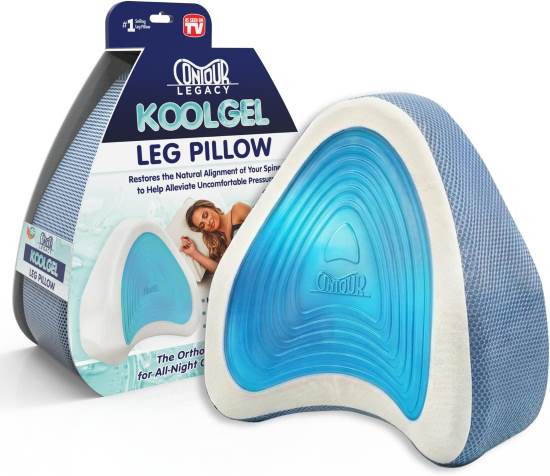
This duplicate listing again features the ventilated memory foam construction. It provides identical structural support but focuses on airflow for warmer environments.
The pillow performs best during extended sleep sessions when body heat gradually builds up. The internal channels allow heat to dissipate rather than accumulating within the foam.
Users often notice the pillow stays comfortable throughout the night without needing frequent repositioning. The foam maintains consistent support even after hours of pressure.
Side sleepers who struggle with warm bedding often prefer this design over the standard Legacy version.
User Review
Angela M.
I tend to sleep warm and most memory foam pillows trap heat. This one feels noticeably cooler after a few hours. It still supports my hips the same way the original did.
Key Features
• Ventilation: Airflow channels reduce heat buildup
• Foam Quality: Maintains structure through long nights
• Comfort: Prevents knees from pressing together
• Ergonomics: Natural leg alignment for side sleepers
• Maintenance: Washable cover for regular cleaning
• Lightweight: Easy to reposition when turning
• Breathability: Better airflow than standard foam
• Limitations: Cooling remains passive not active
Pros and Cons
| Pros | Cons |
| Breathable foam structure | Cooling not dramatic |
| Consistent nighttime support | Slightly firmer texture |
| Comfortable for warm climates | Only designed for side sleepers |
Contour Replacement Pillowcase Cover for The Legacy Pillow
Replacement fabric cover
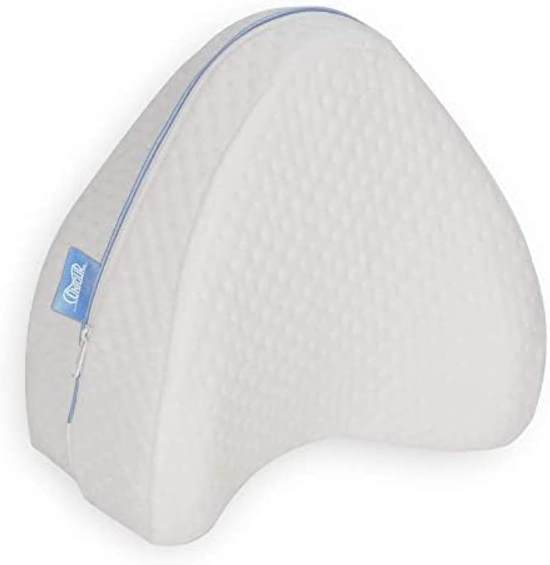
This accessory provides a replacement cover specifically designed for the Legacy pillow shape. It fits snugly over the curved foam without bunching or stretching.
The fabric feels soft and breathable, similar to the original cover included with the pillow. Many users purchase it as a backup while washing the main cover.
Because knee pillows experience nightly skin contact, rotating covers helps maintain cleanliness and extend the foam’s lifespan.
Installation stays straightforward with a simple zipper closure.
User Review
Caroline T.
I bought a spare cover so I could wash one while using the other. The fit matches the original exactly and it keeps the pillow looking new.
Key Features
• Fit: Tailored specifically for Legacy pillow shape
• Comfort: Soft breathable fabric against skin
• Maintenance: Enables easy rotation during washing
• Durability: Fabric holds shape after repeated washes
• Ease of Use: Simple zipper installation
• Hygiene: Helps keep pillow cleaner long term
Pros and Cons
| Pros | Cons |
| Perfect fit for pillow | Only works with Legacy pillow |
| Soft breathable fabric | No foam included |
| Easy zipper installation | Limited color options |
Contour BackMax Bed Wedge Lumbar Support System
Multi position recovery support system
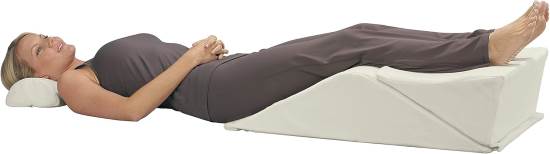
The BackMax system differs significantly from the knee pillow line. Instead of a small spacer pillow, it uses multiple wedge cushions designed to elevate the upper body and legs simultaneously.
When arranged properly the system mimics a zero gravity position often recommended for spinal decompression. This posture distributes weight evenly across the back and reduces pressure on the lumbar region.
The modular design allows several configurations including upright reading positions, leg elevation for circulation, and full reclined support for sleep recovery.
Because the wedges are large, the system suits larger beds or recovery situations rather than everyday pillow use.
User Review
Robert H.
I used the BackMax after a minor back injury. The zero gravity position relieved pressure on my spine and helped me sleep comfortably while recovering. It takes space but the support feels very stable.
Key Features
• Posture Support: Elevates legs and torso for spinal relief
• Modular Design: Multiple wedge arrangements possible
• Comfort: Distributes body weight evenly
• Recovery Use: Helpful after injury or surgery
• Size: Large system suited for full bed setups
• Versatility: Works for reading, rest, or recovery
• Stability: Firm foam structure maintains elevation
• Limitations: Requires significant bed space
Pros and Cons
| Pros | Cons |
| Multiple support configurations | Takes large bed space |
| Excellent spinal elevation | Not portable |
| Stable orthopedic structure | Setup requires adjustment |
Related:
How to Choose the Right Abduction Pillow for Post-Surgery Recovery
Best Affordable Memory Foam Wedge Pillows 2026: Which Design Gives the Most Comfortable Sleep Support?
Buying Guide
Choosing the right orthopedic sleep support involves more than picking a pillow that looks comfortable. Small design differences can significantly change how well the contour knee pillow supports the spine and joints throughout the night.
What Actually Matters Before Choosing
Core Performance Factors
The most important factor is how well the pillow maintains neutral leg alignment. When the upper leg collapses forward during side sleeping, it twists the pelvis and lower spine. A well shaped knee pillow prevents that rotation by creating stable spacing between the knees.
Many buyers assume any soft pillow will work, but ordinary pillows compress unevenly and shift throughout the night. Specialized orthopedic shapes keep consistent spacing even when the sleeper changes position.
Long term satisfaction depends on how well the pillow maintains its structure over time.
Material Quality and Durability
Memory foam quality determines whether the pillow stays supportive after months of nightly pressure. Low density foam tends to flatten and lose its shape, which defeats the purpose of the pillow.
Higher density foam rebounds more reliably and distributes weight evenly across the knees and thighs. That resilience prevents the pillow from collapsing during deep sleep.
Many buyers misunderstand durability because foam feels soft at first. Supportive foam often feels slightly firmer initially but maintains performance much longer.
Comfort and Usability
Comfort comes from both shape and thickness. If the pillow sits too low, the knees still press together. If it sits too high, the hips tilt unnaturally.
Ergonomic contour designs solve this by cradling the legs rather than forcing them apart. The pillow should feel stable but not restrictive when shifting positions during the night.
A pillow that requires straps or constant repositioning may interrupt natural sleep movement.
Maintenance Requirements
Nightly contact with skin and bedding means these pillows accumulate sweat, oils, and dust. Removable covers simplify routine cleaning and extend the life of the foam core.
Buyers sometimes overlook maintenance until the pillow becomes difficult to clean. Replacement covers help maintain hygiene without replacing the entire pillow.
Foam cores generally should remain dry and well ventilated.
Environmental and Situational Compatibility
Sleep environment matters more than many people expect. Warm climates often make dense foam feel hotter over long nights. Ventilated foam designs reduce that heat retention.
Bed size also affects product choice. Compact knee pillows work well in small sleeping spaces, while larger wedge systems require more room.
Understanding where and how the pillow will be used prevents unnecessary frustration.
Safety Considerations
Orthopedic pillows should support natural posture rather than forcing unnatural angles. Excessively thick pillows may tilt the hips too far upward and create new discomfort.
People recovering from injuries should consult medical advice when choosing larger support systems such as wedge setups.
Proper positioning always matters more than pillow size.
Common Buyer Mistakes
Many buyers assume a larger pillow provides better support. In reality overly large knee pillows can push the legs too far apart and create strain in the hips.
Another common mistake involves choosing extremely soft foam. Soft pillows feel comfortable initially but collapse quickly during sleep, eliminating their support benefit.
Some buyers ignore ventilation features even when they sleep warm. Heat buildup can make foam uncomfortable after several hours, especially in humid environments.
Another frequent misunderstanding involves maintenance. People often forget that orthopedic pillows require washable covers to stay hygienic over time.
Many buyers also assume these pillows only help with knee discomfort. In practice they often provide more relief for hips and lower back because they correct pelvic rotation.
Finally some people purchase complex support systems when a simple knee pillow would solve their alignment problem. Matching the product to the specific issue usually produces better results.
How to Match Products to Specific Needs
Casual side sleepers usually benefit most from simple contour knee pillows. These small supports improve alignment without changing the overall sleep setup.
People with chronic hip or back discomfort often prefer memory foam models that maintain shape throughout the night. Consistent support helps prevent posture collapse during deep sleep cycles.
Frequent travelers or people with limited bed space should choose compact designs that move easily during sleep. Smaller pillows also fit better in shared beds.
Users recovering from injuries or dealing with circulation issues may require more structured elevation systems. Wedge systems like the BackMax provide larger scale positioning support for these situations.
Advanced users focused on long term sleep posture sometimes combine knee pillows with supportive mattresses and ergonomic head pillows. That combination improves full body alignment during rest.
Understanding the source of discomfort remains the most reliable way to select the right support.
Conclusion
Contour’s sleep support lineup focuses on a simple concept. Proper alignment reduces stress on joints and muscles during sleep. Even small adjustments in leg positioning can improve comfort throughout the night.
The Legacy knee pillows work best for everyday side sleepers seeking consistent hip and knee support. The ventilated versions help people who tend to sleep warm. Accessories like replacement covers maintain hygiene, while larger systems such as BackMax serve more specialized recovery needs.
Choosing the right contour knee pillow depends on your sleeping position, comfort preferences, and available space. Understanding how each product supports posture helps ensure long term satisfaction.
FAQs
Do knee pillows actually improve sleep posture
Yes, they help maintain neutral hip and spine alignment during side sleeping.
Who benefits most from a knee pillow
Side sleepers with hip, knee, or lower back discomfort usually notice the biggest improvement.
Do cooling knee pillows feel cold
No, ventilated foam simply reduces heat buildup rather than creating a cold sensation.
Can back sleepers use knee pillows
Most contour knee pillows work best for side sleepers rather than back sleeping positions.
How often should knee pillow covers be washed
Regular washing every one to two weeks keeps the pillow hygienic.