

The top cooling pillows for hot sleepers combine airflow, breathable materials, moisture control, and reliable neck support. Among the strongest choices, ventilated latex, shredded foam, phase-change materials, and breathable fiber fills deserve attention. Research suggests adults generally need at least 7 hours of sleep nightly, while body temperature naturally shifts during sleep. Therefore, choosing the right pillow can make a noticeable difference when heat repeatedly interrupts your rest.
If you regularly wake sweaty or flip your pillow searching for a cooler surface, cooling pillows hot sleepers can offer a practical solution. However, a cool-touch cover alone does not guarantee all-night temperature control. The best pillow manages heat while maintaining the support your sleeping position requires.
Key Takeaways
- Choose airflow-friendly fills instead of relying only on cooling surface treatments.
- Ventilated latex and shredded fills often provide strong airflow throughout the night.
- Phase-change covers can manage heat without making the pillow excessively cold.
- Side sleepers usually need more loft than stomach sleepers.
- A breathable pillowcase can preserve more cooling performance.
- Washability matters because sweat can accumulate inside bedding.
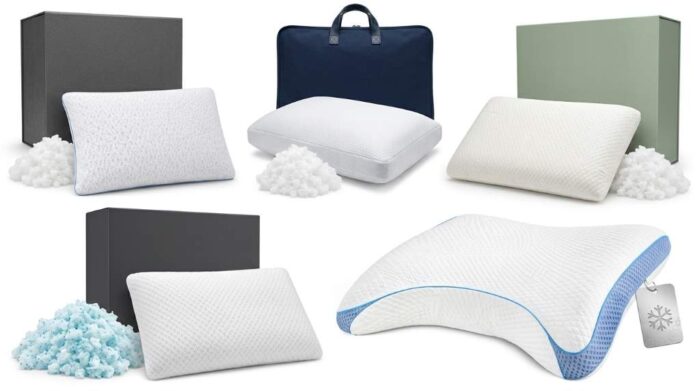
What Makes a Pillow Truly Cooling?
A genuinely cooling pillow does more than feel cold when you first touch it. It should prevent heat from accumulating beneath your head and neck during prolonged contact.
First, look for materials that allow air to circulate through or around the fill. Next, consider thermal conductivity, moisture management, cover breathability, and the pillow’s overall construction.
For example, ventilated latex creates channels that encourage airflow around your head. Meanwhile, shredded foam leaves spaces between pieces, allowing trapped warmth to escape more easily.
Cooling technology also works differently across pillow designs. Gel can absorb heat temporarily, while phase-change materials absorb and release heat according to temperature changes.
The Top Cooling Pillow Types Worth Considering
1. Ventilated Latex Pillows
Ventilated latex stands among the strongest choices for sleepers who want natural responsiveness and airflow. Its resilient structure resists the deep compression that can trap heat inside dense foam.
Additionally, perforations can create pathways for air movement throughout the pillow. Latex also rebounds quickly, which helps maintain consistent support when you change positions.
Choose latex when you want durable support without the slow-sinking sensation associated with traditional memory foam. However, check the loft carefully because some latex pillows feel relatively tall.
2. Shredded Memory Foam Pillows
Shredded memory foam offers a useful compromise between contouring support and ventilation. Individual foam pieces create more internal space than a solid memory foam block.
Furthermore, adjustable designs allow you to remove filling until the pillow reaches your preferred height. This feature particularly helps combination sleepers who change positions throughout the night.
However, not every shredded foam pillow stays cool. Look for open-cell foam, breathable covers, ventilation features, or cooling fibers that complement the loose construction.
3. Phase-Change Cooling Pillows
Phase-change materials help regulate temperature by absorbing excess heat and releasing it later. Therefore, they can provide more controlled temperature management than simple cooling coatings.
These pillows suit sleepers who dislike an aggressively cold surface but still experience nighttime overheating. They also work well when paired with breathable foam or fiber fills.
Still, phase-change technology cannot compensate for a poorly ventilated pillow. If the core traps heat, the surface treatment may provide only temporary relief.
4. Breathable Fiber-Fill Pillows
Fiber-fill pillows can provide excellent airflow because their construction leaves considerable space between fibers. Down alternatives can also feel lighter and less heat-retentive than dense foam.
Moreover, many fiber pillows provide a softer, more traditional hotel-style sensation. They often suit back sleepers and people who dislike firm contouring materials.
The main drawback involves support retention. Some soft fiber fills compress quickly, so choose a pillow with enough resilience for your sleeping position.
5. Buckwheat Pillows
Buckwheat hulls create natural air pockets that encourage ventilation around your head. They also allow precise adjustment because you can add or remove hulls.
However, buckwheat feels substantially different from conventional pillows. The filling can produce rustling sounds, while the firm texture may require an adjustment period.
Choose buckwheat when airflow and adjustability matter more than a plush sleeping surface. It works particularly well for sleepers who prefer structured support.
Cooling Technology Compared
| Cooling Feature | Main Benefit | Best For | Potential Limitation |
|---|---|---|---|
| Ventilated latex | Continuous airflow | Hot sleepers needing support | Can feel springy |
| Shredded foam | Adjustability and airflow | Combination sleepers | Quality varies significantly |
| Phase-change material | Temperature regulation | Moderate to heavy heat buildup | May cost more |
| Gel infusion | Initial heat absorption | Warm sleepers wanting surface cooling | Cooling effect can diminish |
| Breathable fiber | Lightweight ventilation | Back and softer-pillow sleepers | May lose loft |
| Buckwheat hulls | Natural air pockets | Firm-support sleepers | Rustling noise |
How Sleep Position Changes Your Best Choice
Side Sleepers
Side sleepers generally need enough loft to fill the space between the shoulder and head. A pillow that collapses too much can leave the neck angled downward.
Therefore, choose an adjustable cooling pillow when possible. You can remove or add filling until your head remains aligned with your spine.
Ventilated latex and adjustable shredded foam can work particularly well here. Their structure combines support with airflow without forcing one fixed loft.
Back Sleepers
Back sleepers usually need moderate loft that supports the natural curve of the neck. Excessive height can push the head forward and create uncomfortable pressure.
Consequently, prioritize balanced support instead of choosing the thickest cooling pillow available. Medium-loft latex, fiber, or adjustable foam designs can provide useful options.
Stomach Sleepers
Stomach sleepers generally need a thinner, softer pillow to reduce excessive neck extension. A thick cooling pillow can undermine comfort despite excellent temperature management.
Look for low-loft fiber fills or adjustable designs that allow substantial filling removal. Breathability still matters because stomach sleepers keep part of their face close to the pillow.
Combination Sleepers
Combination sleepers benefit most from flexible designs that accommodate frequent position changes. Adjustable shredded fills provide one of the simplest ways to achieve that flexibility.
Additionally, choose a cover that remains breathable after repeated movement. A pillow that shifts easily can create uneven support and localized heat buildup.
Why Some Cooling Pillows Stop Feeling Cool
A pillow can feel cold initially without remaining comfortable throughout the night. Surface temperature represents only one part of the pillow’s thermal performance.
For instance, a gel layer may absorb heat quickly during the first portion of sleep. Eventually, that material can approach your body temperature and provide less noticeable cooling.
Meanwhile, airflow-focused designs address heat differently. They allow warmth to move away from the contact area instead of simply storing that heat temporarily.
Therefore, prioritize sustained heat management over an impressive cold sensation during the first few minutes. This distinction represents one of the biggest gaps in generic cooling-pillow advice.
The Pillowcase Can Change Cooling Performance
Your pillowcase can either support or undermine the cooling features inside your pillow. Dense fabrics can reduce airflow and prevent moisture from evaporating efficiently.
Instead, consider breathable cotton, linen, bamboo-derived fabric, or other lightweight materials. These fabrics can help move moisture away from the skin while allowing greater ventilation.
Also, avoid automatically choosing extremely high thread-count sateen for a cooling pillow. A smoother fabric may feel luxurious but can restrict airflow compared with lighter weaves.
How to Choose a Cooling Pillow That Actually Fits You
Start by identifying why you feel hot at night. Sweat, trapped heat, an unsuitable pillow height, and an overly warm bedroom can produce similar symptoms.
Next, determine your dominant sleeping position and preferred firmness. These factors should guide your pillow selection before you compare cooling technologies.
- For intense heat: prioritize ventilated construction and breathable covers.
- For adjustable support: choose shredded foam or adjustable fiber filling.
- For natural materials: consider ventilated latex or buckwheat.
- For soft comfort: explore breathable fiber-fill alternatives.
- For temperature swings: consider phase-change materials.
- For frequent sweating: prioritize removable, washable covers.
Then examine the pillow’s dimensions, loft, firmness, care instructions, and trial policy. A technically advanced pillow still fails if its shape does not suit your body.
Features That Matter More Than Marketing Claims
Manufacturers frequently use terms such as ice-cool, advanced cooling, and temperature balancing. Those phrases sound persuasive, but they do not explain how the pillow manages heat.
Instead, inspect the actual construction behind the claim. Look for ventilation holes, breathable mesh, open-cell foam, loose fill, moisture-wicking fabric, or phase-change components.
Also, examine cleaning instructions before purchasing. A pillow that requires complicated maintenance may become less practical when you regularly sweat during sleep.
Finally, consider durability because cooling performance means little if the pillow loses its shape quickly. Reliable support and consistent airflow should continue after repeated use.
Common Mistakes Hot Sleepers Should Avoid
Choosing Cooling Gel Alone
Gel can create a pleasant cool sensation, but it does not automatically provide continuous cooling. Always evaluate the entire pillow construction rather than one advertised material.
Ignoring Pillow Height
A pillow can remain perfectly cool while causing poor neck alignment. Consequently, support and cooling should work together rather than compete for priority.
Using a Heavy Pillowcase
A thick case can reduce the airflow that makes your cooling pillow effective. Choose a breathable cover that complements the pillow’s thermal design.
Expecting an Ice-Cold Pillow All Night
Most cooling pillows regulate heat rather than maintain refrigerator-like temperatures. The realistic goal involves reducing heat buildup and improving sleeping comfort.
Replacing the Pillow Without Fixing the Bedroom
Your pillow cannot fully compensate for excessive room heat or heavy bedding. Therefore, pair your cooling pillow with breathable sheets and appropriate nighttime ventilation.
How to Build a Cooler Sleep Setup
Start with the pillow because your head and neck remain in direct contact with it for hours. Then evaluate the surrounding bedding for heat retention.
- Use lightweight, breathable bedding during warm nights.
- Choose moisture-managing sleepwear when sweating remains an issue.
- Keep bedroom air circulating with a suitable fan or ventilation system.
- Avoid stacking several dense pillows beneath your head.
- Wash pillow covers regularly to remove accumulated sweat and oils.
- Replace compressed pillows when they stop providing proper support.
These changes can complement a cooling pillow without requiring an expensive bedroom makeover. More importantly, they address heat from multiple directions instead of relying on one product.
Are Expensive Cooling Pillows Worth It?
Price alone does not determine cooling performance. An expensive pillow with dense foam may perform worse than an affordable breathable design.
However, premium models can justify higher prices when they combine quality materials, durable construction, adjustable support, and strong temperature management. Therefore, compare features rather than simply comparing price tags.
For many sleepers, an adjustable pillow provides particularly strong value. One product can accommodate changing preferences while reducing the risk of buying another pillow later.
When Should You Replace a Cooling Pillow?
Replace your pillow when it develops permanent flattening, uneven lumps, damaged filling, or persistent odor. You should also reconsider the pillow when it no longer supports your neck comfortably.
Additionally, noticeable heat buildup can indicate material degradation or compressed internal structure. Before replacing it, wash the cover and check whether your pillowcase contributes to the problem.
If the pillow remains uncomfortable after cleaning and adjustment, replacement usually makes more sense. A cooling pillow should improve sleep rather than require constant troubleshooting.
Frequently Asked Questions
What is the coolest type of pillow for hot sleepers?
Ventilated latex and airflow-friendly shredded designs often provide excellent sustained cooling because they encourage continuous air movement.
Do memory foam pillows make you sleep hot?
Traditional solid memory foam can retain heat, but open-cell, shredded, ventilated, or gel-enhanced versions can reduce that problem.
Are cooling pillows worth buying?
Cooling pillows can provide worthwhile comfort when heat around your head regularly disrupts sleep.
What pillow material stays coolest overnight?
Breathable materials such as ventilated latex, loose fiber fills, and airflow-friendly shredded designs can remain comfortable longer.
Can a pillowcase make a cooling pillow hotter?
Yes, a dense or poorly breathable pillowcase can reduce airflow and limit moisture evaporation from the pillow surface.
Final Verdict
The best cooling pillow does not simply feel cold when you first lie down. It manages heat, allows airflow, controls moisture, and maintains appropriate support throughout the night.
For most hot sleepers, start with ventilated latex, adjustable shredded foam, breathable fiber, or phase-change designs. Then match the pillow’s loft and firmness to your sleeping position rather than choosing based solely on cooling claims.
Before buying, check the construction, cover fabric, adjustability, cleaning requirements, and return policy. Use these criteria to choose a pillow that keeps you comfortable without sacrificing proper neck support.
Review your current pillow tonight and identify its biggest weakness, then choose your next cooling pillow around that specific problem.