
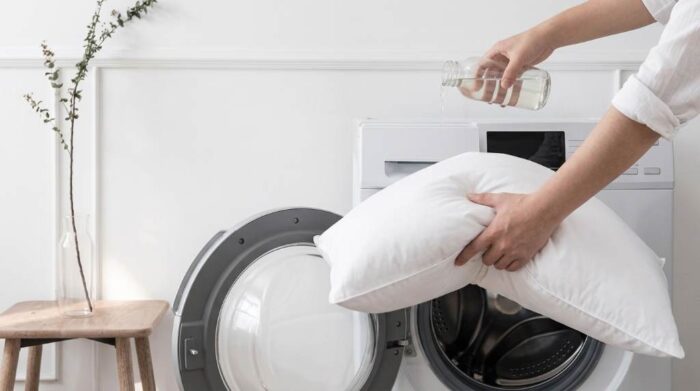
Yes, you can wash goose feather and down pillows at home when the care label permits it. Use a gentle cycle, mild detergent, thorough rinsing, and low-heat drying. Since you spend roughly eight hours sleeping each night, pillow hygiene deserves regular attention. In fact, that represents about one-third of your day against the same pillow surface. Quality goose feather and down pillows can stay comfortable for years with careful maintenance. The biggest mistake involves putting a damp pillow back onto your bed too soon.
Key Takeaways
- Always check the pillow’s care label before choosing a washing method.
- Repair small seam openings before washing to prevent feather leakage.
- Use cold or warm water with a small amount of gentle detergent.
- Choose a gentle cycle and add an extra rinse whenever possible.
- Never wring, twist, bleach, or aggressively scrub the pillow.
- Dry slowly on low heat until the entire filling feels completely dry.
- Fluff the pillow repeatedly during drying to prevent stubborn clumps.
Why Goose Feather And Down Pillows Need Special Care
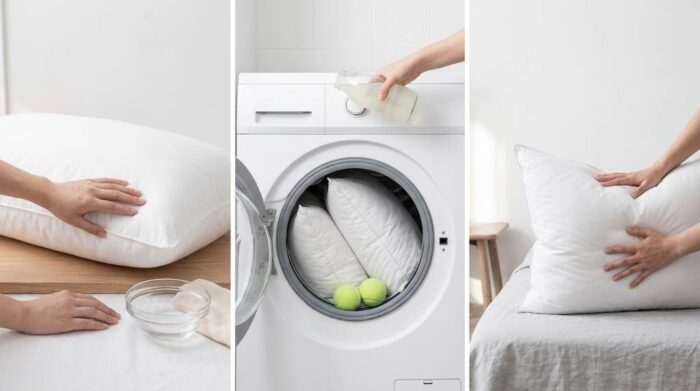
Goose feather and down fillings behave differently from synthetic fiber or foam. Down creates lightweight loft, while feathers provide structure and a slightly firmer feel. Therefore, harsh washing can damage the filling or leave it permanently clumped.
Water also makes natural filling considerably heavier during cleaning. Consequently, weak seams can stretch, leak feathers, or lose their original shape. Proper preparation prevents most problems before the washing machine even starts.
Check Your Pillow Before Washing
Read The Care Label First
Start by reading the manufacturer’s care instructions attached to your pillow. Some pillows allow machine washing, while others require professional cleaning or limited spot treatment.
Never assume that every goose-filled pillow tolerates the same cleaning process. Construction, fabric, stitching, fill composition, and manufacturer instructions can change the recommended method.
Inspect Seams And Fabric
Run your fingers around the entire pillow and inspect every seam carefully. Look for loose stitching, tiny holes, torn fabric, or areas where feathers already escape.
Repair minor openings before washing whenever practical and safe. Otherwise, water movement can enlarge weak areas and release filling inside your washer.
Remove The Pillowcase And Protector
Take off the pillowcase, protector, and any removable outer cover before cleaning. Wash those separate pieces according to their own care instructions.
This step lets water reach the pillow’s outer fabric more effectively. It also prevents oils and residue from protective layers from returning during cleaning.
What You Need For Washing
Gather everything before starting the wash so you can move quickly between cleaning and drying. A large-capacity washer and dryer make the process considerably easier.
- Gentle liquid detergent
- Large-capacity front-loading washer
- Large-capacity dryer
- Clean dryer balls
- Clean towels for handling excess moisture
- Clean drying rack for backup air drying
Choose a detergent that leaves minimal residue and avoid aggressive cleaning additives. In particular, skip bleach, fabric softener, and strong stain-removing chemicals.
How To Wash Goose Feather And Down Pillows Safely
Step 1: Balance The Washing Machine
If you have two washable pillows, wash them together to balance the machine load. One pillow alone can create an uneven load during spinning.
However, never force extra pillows into a crowded drum. The pillows need enough room for water and detergent to circulate properly.
Step 2: Choose Cool Or Warm Water
Select cold or warm water according to the care label. Avoid very hot water unless the manufacturer specifically approves that temperature.
Gentler temperatures reduce unnecessary stress on delicate outer fabrics and natural filling. They also help preserve the pillow’s original loft and feel.
Step 3: Add A Small Amount Of Detergent
Use only a small amount of mild liquid detergent for the load. Excess detergent creates residue that can make natural filling feel stiff or sticky.
Liquid detergent also dissolves more easily than powder during a short gentle cycle. Therefore, it provides a practical choice when the manufacturer permits machine washing.
Step 4: Select The Gentle Cycle
Choose the washer’s gentle, delicate, or similar low-agitation setting. Avoid aggressive cycles that repeatedly twist and compress the pillow.
Let the machine perform the cleaning rather than manually squeezing the filling. Excessive manipulation can deform the internal distribution and encourage clumping.
Step 5: Run An Extra Rinse
Run an additional rinse cycle after the primary wash finishes. This simple step helps remove detergent trapped inside dense feather and down filling.
If your machine offers adjustable rinsing, prioritize thorough rinsing over speed. Residual soap can also interfere with drying and leave an unpleasant smell.
Step 6: Remove Water Without Wringing
Let the washer extract water through its spin cycle rather than twisting the pillow yourself. Never wring the pillow by hand or compress it aggressively.
Natural filling becomes extremely heavy when wet, so support the pillow from underneath. Move it carefully between the washer and dryer to reduce strain on seams.
The Most Important Part: Drying
Drying determines whether your freshly washed pillow becomes fluffy or develops lasting problems. Even a perfectly washed pillow can smell musty when moisture remains inside.
Therefore, treat drying as a separate process rather than a quick final step. Check the pillow repeatedly until the filling feels uniformly dry throughout.
Use Low Heat And Dryer Balls
Place the washable pillow inside a sufficiently large dryer and select low heat. Add clean dryer balls to help separate clumps as the pillow tumbles.
Pause the dryer periodically and remove the pillow for manual fluffing. Shake it from different directions and redistribute the filling with your hands.
Continue drying until no cool, damp, or heavy areas remain inside. The center deserves particular attention because surface fabric can feel dry prematurely.
Why Complete Drying Matters
Trapped moisture creates an environment where musty odors and microbial growth can develop. It can also cause the filling to clump and lose its normal loft.
Never judge dryness solely by touching the outer fabric. Instead, squeeze several areas and compare their weight, temperature, and resilience.
Can You Air-Dry A Goose Feather Pillow?
Yes, air drying can work when the care instructions allow it and weather conditions cooperate. Place the pillow flat in a well-ventilated area rather than hanging it vertically.
Turn and fluff the pillow regularly so moisture does not remain concentrated inside. Avoid returning it to the bed until the filling feels completely dry.
What If You Need To Hand-Wash It?
Hand washing provides an alternative when the care label recommends gentle manual cleaning. Fill a clean tub with cool or lukewarm water and dissolve a small amount of mild detergent.
Submerge the pillow gradually and press it gently to move water through the filling. Never twist, wring, or aggressively scrub the pillow during this process.
Drain the dirty water and refill the tub with clean water for rinsing. Repeat until the water remains clear and no noticeable detergent residue remains.
Press the pillow gently between clean towels to remove excess moisture. Then dry it flat with frequent turning and fluffing until completely dry.
How To Remove Common Pillow Problems
Yellowing And Sweat Stains
Yellow discoloration commonly develops when sweat, skin oils, and moisture accumulate over time. Start with the mildest cleaning method permitted by the care label.
Avoid pouring strong stain removers directly into natural filling. Aggressive chemicals can damage delicate fabrics and compromise the pillow’s internal materials.
Musty Smell
A musty smell often signals trapped moisture or insufficient drying. Re-dry the pillow thoroughly before attempting stronger cleaning methods.
During drying, increase airflow and fluff the filling repeatedly. If the odor remains after complete drying, professional cleaning may provide a safer solution.
Flattened Or Lumpy Filling
Clumping usually develops when wet filling stays compressed or dries unevenly. Break up clusters manually during the drying process and redistribute the contents frequently.
If the pillow remains permanently lumpy after thorough drying, inspect its construction and filling condition. Repeated washing cannot restore filling that has already deteriorated.
Cleaning Method Comparison
| Method | Best For | Main Advantage | Main Risk |
|---|---|---|---|
| Gentle machine wash | Care-label approved pillows | Consistent cleaning | Improper agitation |
| Hand washing | Delicate washable pillows | Maximum control | Longer drying |
| Spot cleaning | Small isolated stains | Minimal moisture | Limited overall cleaning |
| Professional cleaning | Non-washable or valuable pillows | Specialized handling | Higher cost |
How Often Should You Wash Them?
There is no universal washing schedule for every goose feather and down pillow. Your climate, perspiration, allergies, pillow protector, and manufacturer’s instructions should guide the frequency.
As a practical starting point, consider washing washable pillows around every four to six months. Between washes, clean the pillowcase and protector regularly and air the pillow occasionally.
Do not wash a pillow simply because a calendar reminder says so. Instead, consider visible staining, persistent odor, heavy use, and the manufacturer’s maintenance recommendations.
Keep Your Pillows Cleaner Between Washes
A washable pillow protector provides the first defense against sweat, oils, skin flakes, and accidental spills. Choose a breathable protector that fits securely without compressing the pillow excessively.
Fluff the pillow regularly to redistribute filling and restore its shape. Airing it periodically can also reduce stale odors without exposing the filling to unnecessary moisture.
- Use a clean pillowcase consistently.
- Wash the pillowcase according to its fabric instructions.
- Keep a protective cover between your head and pillow.
- Air the pillow occasionally in a dry, well-ventilated room.
- Fluff the filling regularly to maintain even distribution.
- Address spills quickly before they penetrate the pillow.
When You Should Not Wash The Pillow At Home
Do not proceed with home washing when the care label specifically prohibits it. You should also reconsider home cleaning when the pillow has severe seam damage or fragile construction.
Expensive, antique, or unusually delicate pillows deserve professional evaluation before exposure to water. A professional cleaner can recommend a method based on the pillow’s materials and construction.
Likewise, replace severely deteriorated pillows instead of repeatedly trying to restore them. Cleaning improves maintenance, but it cannot reverse permanent structural breakdown.
Common Mistakes That Damage Feather And Down Pillows
- Using too much detergent
- Choosing a harsh wash cycle
- Using excessive heat during drying
- Skipping the second rinse
- Wringing or twisting the pillow
- Ignoring small seam tears
- Stopping the dryer while the center remains damp
- Using bleach or fabric softener without manufacturer approval
These mistakes often create problems that appear after washing rather than immediately. Careful handling costs little, yet it protects the pillow’s loft and usable lifespan.
A Simple Post-Wash Quality Check
Before putting the pillow back on your bed, perform a quick inspection. The pillow should feel lightweight, evenly filled, odor-free, and completely dry.
Press the center and release it to evaluate recovery. Then inspect the seams and corners for leakage, distortion, or unusual dampness.
Finally, shake the pillow firmly and reshape it with both hands. If the filling distributes evenly, your cleaning and drying process worked properly.
Frequently Asked Questions
Can You Put Goose Feather And Down Pillows In The Washing Machine?
Yes, if the care label permits machine washing, use a gentle cycle with mild detergent and careful drying.
What Detergent Should You Use For Goose Feather And Down Pillows?
Use a small amount of mild liquid detergent that leaves minimal residue and avoid harsh additives.
Can You Dry Goose Feather And Down Pillows In A Dryer?
Yes, when permitted by the care label, dry them on low heat and continue until completely dry.
How Do You Stop Down Pillows From Clumping After Washing?
Use gentle washing, thorough rinsing, low-heat drying, and frequent fluffing throughout the drying process.
How Do You Know When A Goose Down Pillow Is Completely Dry?
Check several areas for coolness, dampness, unusual weight, or clumps before using the pillow again.
Final Verdict
Washing goose feather and down pillows safely depends more on controlled drying than aggressive cleaning. Follow the care label, use gentle settings, rinse thoroughly, and never rush the drying stage.
With regular protection and sensible maintenance, natural-filled pillows can remain comfortable and supportive for much longer. Check your pillow today, then clean it using the method its manufacturer recommends.