

Ah, the humble pillow. It’s our nightly companion, cradling our heads as we drift off to dreamland. But let’s be honest, pillows can get pretty grimy over time, accumulating sweat, oils, drool, dust mites, and allergens. Washing them is a great start, but what about drying? The big question looms: Can you actually put a pillow in the dryer?
The short answer is: often, yes, but it depends heavily on the pillow’s filling and the manufacturer’s instructions. Tossing any old pillow into the dryer without checking can lead to lumpy disasters, damaged filling, or even safety hazards.
This guide will walk you through everything you need to know about safely drying your pillows, keeping them fresh, fluffy, and extending their lifespan.

Why Bother Drying Your Pillow Properly?
Before we get into the how, let’s talk about the why. Thoroughly drying your pillow after washing (or even just to freshen it up) is crucial for several reasons:
- Hygiene: Damp pillows are breeding grounds for mold, mildew, and bacteria. These unwelcome guests can trigger allergies, cause respiratory issues, and create unpleasant odors. Proper drying eliminates moisture and keeps your sleeping environment healthier.
- Dust Mite Control: While washing kills many dust mites, ensuring the pillow is bone-dry helps prevent any survivors from thriving in a damp environment.
- Maintaining Fluffiness & Support: Clumped, damp filling makes for an uncomfortable, unsupportive pillow. Correct drying techniques help restore the pillow’s loft and evenness.
- Extending Pillow Life: Taking proper care, including correct drying, helps your pillow last longer, saving you money in the long run.
Can You Actually Put Your Pillow in the Dryer? The Material Matters!
This is where things get specific. Not all pillows are created equal, and their fillings react differently to the heat and tumbling action of a dryer. Always, always, always check the care label first! It’s your pillow’s instruction manual. If the label says “Do Not Tumble Dry” or “Air Dry Only,” believe it. If the label is missing or illegible, err on the side of caution.
Here’s a breakdown of common pillow types and their dryer compatibility:
- Down and Feather Pillows: Generally, yes, these can go in the dryer. In fact, the gentle heat can help restore their natural loft. The key is low heat or even an air-fluff/no-heat setting. High heat can scorch or damage the delicate down and feathers.
- Synthetic/Polyester Pillows: Most synthetic pillows are dryer-safe, usually on a low to medium heat setting. These are quite resilient, but high heat can still sometimes cause the fibers to melt or clump.
- Memory Foam Pillows (Solid or Shredded): Generally, NO! This is a big one. The high heat of a dryer can irrevocably damage the structure of memory foam, causing it to crumble, lose its supportive qualities, and potentially become a fire hazard. Some labels might specify spot cleaning and air drying only. Hand washing (if allowed) and air drying away from direct heat or sunlight is the safest method. Never put a solid memory foam block in a washer or dryer unless the manufacturer explicitly states it’s okay (which is rare).
- Latex Pillows: Similar to memory foam, latex pillows are usually NOT dryer-safe. Heat can degrade the latex. Air drying is the recommended method.
- Buckwheat Pillows: You cannot dry the buckwheat hulls themselves. You typically empty the hulls into a container, wash and dry the cover (check its label, it’s often cotton and dryer-safe), and then refill it once the cover is completely dry.
Step-by-Step Guide to Safely Drying Pillows (When Applicable)

If your pillow’s care label gives the green light for tumble drying, follow these steps for the best results:
- Check the Care Label (Again!): We can’t stress this enough. Confirm the recommended heat setting (usually low, delicate, or air fluff).
- Prepare the Pillow: If you’ve just washed it, gently squeeze out as much excess water as possible. Avoid vigorous wringing, which can damage the filling or structure. Give it a good fluff by hand to break up any initial clumps.
- Use a Large Capacity Dryer: Pillows need room to tumble freely. Overcrowding prevents proper airflow and even drying. If your home dryer is small, consider using a larger machine at a laundromat.
- Dry in Pairs (Optional but Recommended): Drying two pillows at once helps balance the load in the dryer drum, promoting more even tumbling and drying. If you only have one pillow to dry, add a few clean bath towels to help balance things out.
- Select the Right Setting: Choose the lowest heat setting possible, such as “low,” “delicate,” or even “air fluff” / “no heat.” While no-heat takes longer, it’s the safest option, especially for down/feather pillows.
- Add Dryer Balls (or a Substitute): This is key! Toss in 2-3 wool dryer balls or clean tennis balls (tucking tennis balls into clean socks can prevent fuzz transfer and soften the noise). These bounce around, physically breaking up clumps in the filling and helping the pillow retain its loft and dry more evenly.
- Dry in Intervals & Fluff: Don’t just set it and forget it. Set the dryer for about 30-60 minutes (depending on the pillow type and heat setting). After the cycle, take the pillows out and feel them. Manually fluff them, breaking up any clumps and redistributing the filling. Check for damp spots.
- Repeat if Necessary: Pillows, especially dense ones like down, can take a surprisingly long time to dry completely – sometimes several hours or multiple cycles. Repeat the drying interval (checking and fluffing each time) until the pillow feels entirely dry, both inside and out. Squeeze it firmly – if it feels even slightly damp or cool in the center, it needs more time.
- Final Airing (Optional): Even after the dryer, letting the pillow air out for a few hours (perhaps outdoors on a sunny, non-humid day, or indoors near a fan) can ensure any residual internal moisture evaporates.
Potential Risks and How to Avoid Them
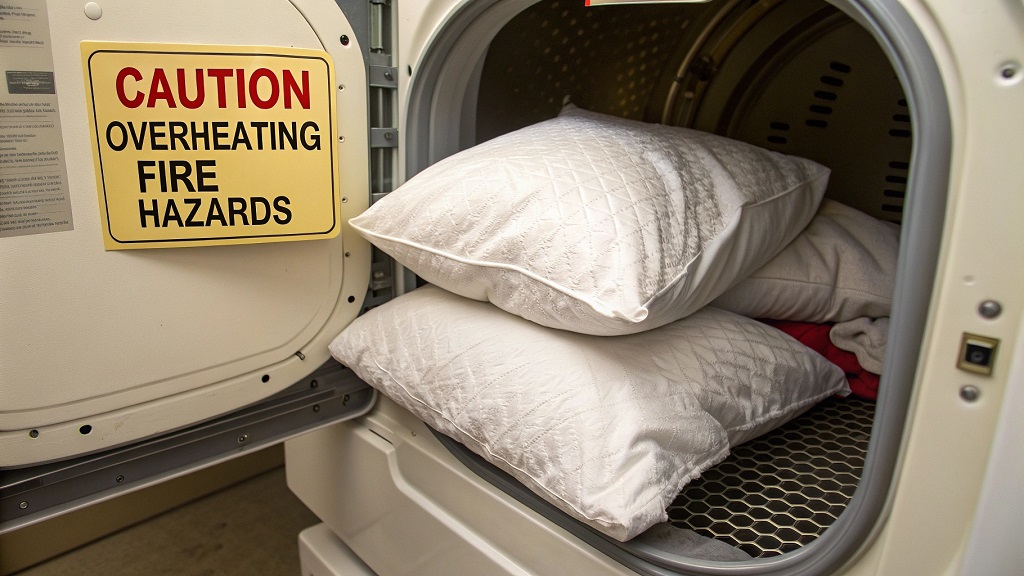
While drying pillows in a dryer is often safe, potential problems can arise if you don’t follow precautions:
- Clumping: High heat or insufficient tumbling can cause filling (especially synthetic) to clump together permanently. Avoidance: Use low heat and dryer balls/tennis balls, fluff manually between cycles.
- Heat Damage: Excessive heat can scorch feathers, melt synthetic fibers, or destroy memory foam/latex structure. Avoidance: Always use the lowest possible heat setting or air fluff. Never dry foam pillows in the dryer unless explicitly permitted.
- Incomplete Drying: Removing the pillow too soon leads to dampness inside, risking mold and mildew. Avoidance: Be patient! Ensure the pillow is completely dry, even if it takes multiple cycles. Squeeze the core to check.
- Shrinking/Warping: Very high heat might shrink some pillow covers or warp the shape. Avoidance: Stick to low heat.
- Fire Hazard (Foam): As mentioned, the materials in memory foam and latex can be flammable and degrade dangerously under high heat. Avoidance: Keep foam pillows OUT of the dryer.
People Also Ask (FAQs)
Read More Also: How to Embrace Comfort and Wellness: A Comprehensive Guide to Using a Wedge Pillow
Q1: How long does it take to dry a pillow in the dryer?
A: It varies greatly depending on the pillow type, its density, the dryer’s efficiency, and the heat setting. Expect anywhere from 1 hour (for lighter synthetic pillows on low heat) to 3+ hours (for dense down pillows, especially on air fluff). Check progress every 30-60 minutes.
Q2: Can I dry two pillows at once?
A: Yes, and it’s often recommended! Drying two pillows helps balance the dryer load for more effective tumbling, provided your dryer is large enough to accommodate them without overcrowding.
Q3: What dryer setting should I absolutely use for pillows?
A: Low heat or no heat/air fluff is the safest bet for almost all dryer-safe pillows. Check the care label, but when in doubt, go lower and slower. Avoid high heat settings.
Q4: What can I use instead of dryer balls?
A: Clean tennis balls (ideally inside clean socks) are a common alternative. Some people roll up aluminum foil into balls (though these don’t fluff as much) or even tie a clean t-shirt or socks into tight balls. Wool dryer balls or tennis balls generally work best for fluffing.
Q5: How do I know if my pillow is really dry inside?
A: Don’t just trust the feel of the cover. Squeeze the pillow firmly in several spots, especially the center. It should feel light, airy, and uniformly warm (or room temperature if air drying). If it feels cool, heavy, or you sense any dampness, it needs more drying time. Smell it too – a lingering damp or musty odor means it’s not dry.
Q6: Seriously, can I put my memory foam pillow in the dryer just once on low?
A: It’s strongly advised against it. The heat, even on low, risks damaging the foam’s structure and integrity. Air drying is the standard recommendation for memory foam and latex to preserve their properties and ensure safety. Always follow the care label instructions.
Read More Also: Black Specks on Your Pillow? Uncover the Causes and Effective Cleaning Tips
Conclusion: Sweet Dreams on Fresh, Dry Pillows
So, can you put a pillow in the dryer? For many common types like down, feather, and synthetic, the answer is a qualified yes – if you follow the rules: check the label, use low or no heat, add dryer balls, allow plenty of time, and ensure complete dryness.
However, for memory foam and latex pillows, the dryer is usually off-limits due to the risk of heat damage. Air drying is the way to go for these materials.
Investing a little time in properly drying your pillows pays off with a cleaner, healthier, more comfortable sleep environment and pillows that stay fluffy and supportive for longer. When in doubt, always consult that all-important care label – it’s your best guide to keeping your pillow happy!