
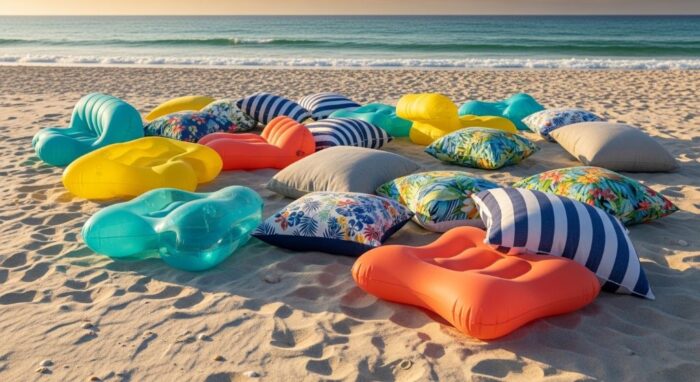
A day at the beach is one of life’s simple pleasures. The sound of the waves, the warmth of the sun, and the feeling of soft sand beneath you all add up to pure relaxation. However, one thing can quickly ruin that perfect afternoon: an uncomfortable surface to rest your head on.
That is where beach pillows come in. They are a small but surprisingly important part of your beach kit. The right pillow can turn a good beach day into a great one. The wrong choice can leave you with a stiff neck and a disappointing nap.
With so many options on the market, choosing the best beach pillow for your needs can feel overwhelming. Therefore, this guide walks you through all the major types of beach pillows, what makes each one different, and exactly how to compare them so you find the perfect match for your style of relaxation.
Why the Right Beach Pillow Makes Such a Big Difference
Not all pillows are created equal, and beach pillows are especially varied. A regular indoor pillow simply does not work at the beach. It absorbs sand, gets damp from humidity, and dries out slowly. It is also bulky to carry.
Beach pillows are designed specifically for outdoor use. They are built to handle sand, moisture, and sun exposure. Additionally, they are designed to be portable, which means they need to be lightweight and easy to pack. However, portability and comfort do not always go hand in hand. That is why understanding the different types helps you find the right balance for your needs.
The right beach pillow supports your neck and head properly, stays cool in the heat, resists sand and water, and packs away easily. When you find one that ticks all those boxes for your specific habits, the difference is immediately noticeable.
The Main Types of Beach Pillows and How They Differ
Beach pillows fall into several broad categories. Each type has a different design philosophy, and each serves a slightly different kind of beach-goer. Knowing what each type offers is the first step toward making a smart comparison.
Inflatable Beach Pillows
Inflatable pillows are the most popular choice for travelers and frequent beach visitors. They pack down to almost nothing when deflated. You can roll them up and slip them into a small bag or even a jacket pocket. When you arrive at the beach, you simply inflate them in a few breaths.
However, comfort is the main trade-off with inflatables. The surface can feel firm and plasticky compared to foam or fiber-filled options. Many modern inflatables address this by adding a soft fabric cover. Additionally, some use a velvet or velour outer layer that feels gentler against your skin and does not get as hot in direct sunlight.
Inflatables are also easy to clean. A quick rinse with fresh water removes sand and salt. They dry almost instantly. Therefore, if portability is your top priority, an inflatable pillow is hard to beat.
Foam Beach Pillows
Foam pillows offer a much more cushioned feel than inflatables. They use either solid foam or shredded memory foam inside a water-resistant shell. The result is a pillow that feels closer to what you might use at home, but with materials suited for outdoor conditions.
The downside is size and weight. Foam pillows are bulkier and heavier than inflatables. They do not compress significantly, so you need a larger beach bag to carry them. However, if comfort is your main concern and you do not mind carrying a bit more, foam pillows deliver a noticeably better rest.
Memory foam versions are particularly good for people who need neck support. The foam contours to the shape of your head and neck, reducing pressure points. Additionally, shredded foam options tend to stay cooler than solid foam because air can move through the fill more freely.
Neck and Travel Pillows Adapted for the Beach
U-shaped travel pillows are familiar to anyone who has taken a long flight. These same pillows work surprisingly well at the beach, particularly when you are sitting upright in a beach chair rather than lying flat on a towel.
They wrap around the back of your neck and support your head from both sides. This prevents your head from drooping to one side when you doze off. Therefore, they are an excellent choice for sitting beach relaxation rather than lying down.
Most travel pillows use memory foam or microbead fill. Microbead versions are lightweight and moldable. They shift to follow your movements, which many people find more comfortable than firm foam. However, microbead pillows can lose their shape over time as the beads compress with use.
Sand-Filled and Weighted Beach Pillows
Some beach pillows are designed to be filled with sand on the spot. You simply fill the pillow casing with sand from the beach itself, creating a firm, weighted cushion. These pillows pack completely flat because they arrive empty.
Sand-filled pillows offer a unique combination of portability and firmness. The weight of the sand keeps the pillow from shifting around as you move. Additionally, sand naturally molds to the shape of your head, providing surprisingly good support.
However, they take a few minutes to set up and can be messy. Emptying the sand back out before you leave is also a consideration. Therefore, these work best for people who are staying at one spot for an extended time rather than moving around frequently.
Waterproof and Quick-Dry Beach Pillows
Some beach pillows are built specifically for wet conditions. They use fully waterproof outer shells and quick-drying inner materials. These are ideal for people who spend time near the water’s edge, enjoy water sports, or simply want a pillow they can use in or near the surf without worrying about it getting damaged.
Quick-dry pillows typically use synthetic fills like polyester fiberfill. This material does not absorb water the way natural fills do. It releases moisture quickly and returns to its original shape. Additionally, waterproof outer shells prevent sand from embedding deeply into the fabric, making them very easy to shake clean.
Key Factors to Compare When Choosing a Beach Pillow
Now that you know the main types, it is time to compare them against the factors that matter most for your beach experience. The following criteria will help you make a clear, confident decision.
Comfort and Support Level
Comfort is the most personal factor. Some people love a firm, supportive pillow. Others prefer something soft and plush. Think about how you tend to rest at the beach. Do you lie flat on a towel? Do you recline in a chair? Do you nap on your side or on your back?
Side sleepers generally need more loft, which means a thicker pillow to keep the spine aligned. Back sleepers do well with lower, flatter pillows. Foam and fiber-filled pillows tend to offer better contouring support, while inflatables and sand-filled options lean more toward firmness.
Portability and Pack Size
If you travel to the beach by foot, bicycle, or public transport, pack size matters enormously. Inflatable and sand-filled pillows are the clear winners here because they compress to almost nothing. Foam pillows are the worst performers for portability. However, some compressed foam options use a compression bag that reduces their size considerably.
Consider also the weight. Carrying a heavy pillow to the beach adds up, especially if you have other gear to manage. Lightweight options like inflatables and travel pillows are far easier to bring along on a long walk to the shore.
Sand and Water Resistance
Sand resistance is one of the most practical factors to consider. Any pillow that uses a textured or open-weave fabric will trap sand quickly. Look for pillows with smooth, tightly woven outer materials. These allow sand to be brushed or shaken off easily.
Water resistance is equally important. Even if you do not plan to swim, splashes, rain, and moisture from the ground are all common at the beach. A water-resistant shell keeps the fill dry and prevents the growth of mould or mildew. Therefore, always check the outer material of any pillow you are considering.

Temperature Regulation
Lying in the sun on a hot day makes temperature regulation a real concern. Dark-coloured pillows absorb more heat. Solid foam traps warmth more than shredded foam or fiberfill. Inflatable pillows with fabric covers can get warm on the side facing the sun.
Look for pillows with light-coloured, breathable covers if you plan to use them in direct sunlight. Some pillows use mesh panels on one side for added airflow. Additionally, quick-dry synthetic fills tend to stay cooler than foam because they allow more air circulation.
Durability and Materials
A beach pillow is exposed to harsh conditions. UV rays, salt water, sand abrasion, and repeated inflation and deflation all put stress on materials over time. Higher-quality pillows use UV-resistant fabrics and reinforced seams that hold up much longer under these conditions.
For inflatables, check the valve quality. A poorly made valve is the most common failure point. For foam pillows, check that the cover is removable and washable. This extends the life of the pillow significantly. Therefore, investing a little more in quality materials usually pays off over many beach seasons.
Matching the Right Pillow Type to Your Beach Style
Different people use the beach in different ways. Matching your pillow type to your beach habits makes the comparison much simpler.
- Sunbathers who lie flat for hours benefit most from foam or quick-dry fiber pillows with good neck contouring
- Travelers and day-trippers who pack light will find inflatable pillows the most practical choice
- Chair relaxers who nap sitting upright get the best support from U-shaped neck pillows
- Families with children benefit from durable, washable, quick-dry options that handle rough treatment
- Water sports enthusiasts need fully waterproof pillows that can get wet without absorbing moisture
- Budget-conscious shoppers will find inflatable and sand-filled pillows offer the best value
Additionally, think about how often you go to the beach. If you are a once-a-year visitor, a basic inflatable is perfectly adequate. However, if you spend many weekends at the shore throughout the season, investing in a higher-quality foam or quick-dry option is worth the extra cost.
Tips for Getting the Most Out of Any Beach Pillow
No matter which type of beach pillow you choose, a few practical habits will help you get the best experience from it.
- Always shake or brush your pillow before packing it away to remove as much sand as possible
- Rinse inflatable and waterproof pillows with fresh water after each use to remove salt and prevent material degradation
- Store foam pillows in a dry, ventilated space at home rather than sealed in a bag, which can trap moisture
- Use a lightweight pillowcase made of quick-dry fabric over your pillow for extra comfort and easier cleaning
- Partially deflate inflatables when carrying them in a hot car, as heat expands the air inside and can stress seams
Furthermore, if you find that no single pillow type fully meets your needs, consider pairing two options. For example, a foam pillow for lying down combined with a travel neck pillow for sitting up covers both positions with optimal comfort.
Conclusion
Choosing the right beach pillow comes down to knowing what you need and understanding what each type offers. Inflatable pillows win on portability. Foam pillows win on comfort. Neck pillows are best for upright relaxation. Sand-filled pillows offer a unique firmness with zero pack weight. Waterproof and quick-dry options are ideal for active, water-facing use.
When comparing options, always weigh comfort, portability, sand and water resistance, temperature regulation, and durability against each other. No single pillow is perfect for everyone. However, there is a perfect pillow for every type of beach-goer.
Therefore, think about how you actually spend your time at the beach, how far you carry your gear, and how often you go. With those answers in mind, this guide gives you everything you need to make a confident, well-informed choice. A good beach pillow is a small investment that pays back in comfort every single time you lay your head down to enjoy the sound of the waves.
Frequently Asked Questions
1. What is the most comfortable type of beach pillow for lying flat?
For lying flat on a towel or beach mat, memory foam or shredded foam beach pillows offer the best comfort. They contour to the shape of your head and neck, reducing pressure points and providing better spinal alignment than inflatables. Look for a version with a removable, washable, quick-dry cover for the most practical combination of comfort and beach-ready durability.
2. Are inflatable beach pillows worth buying?
Yes, inflatable beach pillows are absolutely worth buying for most people. They pack down to almost nothing, weigh very little, and are easy to clean. Modern versions with soft fabric covers are significantly more comfortable than older bare-plastic designs. They are the best choice for travelers, hikers, and anyone who values a minimal, lightweight beach kit.
3. How do I keep sand out of my beach pillow?
The best way to keep sand out is to choose a pillow with a smooth, tightly woven outer fabric. Textured or open-weave materials trap sand deeply. After each use, shake or brush the pillow thoroughly before packing it. Additionally, using a removable, washable pillowcase over your beach pillow adds a protective layer that is easy to clean separately.
4. Can I use a regular travel pillow as a beach pillow?
You can use a regular travel pillow at the beach, but it is not ideal. Most travel pillows are not designed for moisture, sand, or UV exposure. They absorb dampness, trap sand in their fabric, and can degrade quickly under direct sun. If you want to use a travel-style pillow at the beach, look for one specifically marketed as outdoor or beach-ready with water-resistant materials.
5. What should I look for in a beach pillow for a child?
For children, prioritize durability, washability, and soft materials. Kids are rough on gear, so sturdy seams and tough outer fabrics matter. A quick-dry fiberfill pillow with a removable, machine-washable cover is usually the best option. Additionally, choose a smaller size appropriate for a child’s head, as adult-sized pillows do not provide proper neck support for young children.
Related Topics:
How to Choose the Right Travel Pillow for Airplane Trips
Orthopedic Pillows for Neck Pain: Do They Really Help?